


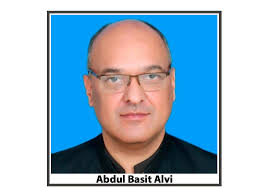
By: Abdul Basit Alvi
With over 250 million Muslims, the people of Pakistan hold a deep and abiding love for the land where the Prophet Muhammad (peace be upon him) was born, where the Qur’an was revealed, and where the Kaaba, the qibla of all Muslims, stands. This reverence is not confined to ritual obligations but flows from a heartfelt connection to the sacred history and legacy of Islam.
Since Pakistan’s inception, this spiritual connection to Saudi Arabia has profoundly influenced both public sentiment and national policy. Successive Pakistani leaders, along with ordinary citizens, have consistently expressed admiration and a sense of protective duty toward the Kingdom. Across all segments of society, the holy lands of Saudi Arabia are held in the highest esteem. For practicing Muslims in Pakistan, performing Hajj or Umrah is not merely a religious duty, but a cherished aspiration—an emotional journey to the sacred heart of their faith.
The recent signing of the Strategic Mutual Defence Agreement (SMDA) between Pakistan and Saudi Arabia marks a historic milestone in their enduring brotherly ties, both from an Islamic and strategic perspective. This accord transcends a typical diplomatic agreement—it is a powerful reaffirmation of the deep trust, shared values, and collective responsibility that unite the two nations, especially in military cooperation and mutual security. Signed by Prime Minister Shehbaz Sharif and Saudi Crown Prince and Prime Minister Mohammed bin Salman, the pact transforms a long-standing informal understanding into a formal, structured, and binding commitment to stand united against any external aggression.
From an Islamic viewpoint, this agreement embodies the very spirit of brotherhood emphasized in the Qur’an and Hadith. The concept of the Ummah teaches that believers are like one body—when one part suffers, the entire body feels the pain. This strategic pact between Pakistan and Saudi Arabia brings that principle to life in a concrete and actionable way. The provision that any external attack on either nation will be treated as an attack on both—triggering a joint defense—speaks volumes about the unbreakable unity between the two countries, not merely as allies but as guardians of each other’s sovereignty, security, and Islamic sanctities. Such a level of defense cooperation is rare in the Muslim world, making the SMDA a powerful example of Islamic solidarity applied to modern geopolitics.
Moreover, the agreement extends beyond conventional military alliances. It reflects a shared commitment to peace, security, and stability—not only within their own borders but across the wider region. Officials from both countries have stressed that this pact is not targeted against any specific nation, but is intended to bolster readiness against current and emerging threats. The SMDA encompasses joint military training programs, coordinated defense planning, multilateral exercises, and advanced collaboration within the defense industry. These elements extend beyond mere technical or strategic measures—they embody a deeper vision of integration, mutual capacity-building, and collective deterrence. Together, they hold the potential to become a formidable force for regional peace and security, particularly within the Muslim world.
The timing and grandeur of the SMDA’s signing ceremony further underscore its historic significance. Upon his arrival in Saudi Arabia, Prime Minister Shehbaz Sharif was welcomed not just as a foreign dignitary, but as a trusted brother of the Kingdom. His entry was marked by full royal honors at the impressive Qasr Al-Yamamah palace in Riyadh. Saudi F-15 fighter jets escorted his aircraft as it entered Saudi airspace—a rare honor that signifies the high regard in which Pakistan is held by Saudi leadership. This aerial escort highlights the strategic importance Riyadh assigns to its bond with Islamabad. Upon landing, the Prime Minister was greeted with a guard of honor, and the Royal Saudi Armed Forces stood in ceremonial formation, a tribute reserved for the closest and most esteemed allies.
At the royal court, Crown Prince Mohammed bin Salman personally received Prime Minister Shehbaz Sharif, further reflecting the warmth and depth of their bilateral ties. The symbolism of this royal reception resonated strongly in Pakistan, where it was hailed as an extraordinary expression of Islamic unity and political trust. The Pakistani flag was prominently displayed throughout Riyadh, and the streets were lined in honor of the delegation. This generous hospitality draws deeply from Islamic tradition, where honoring guests—especially those arriving for noble, strategic, or religious reasons—is regarded as an act of reverence and piety.
In gratitude for the warm reception, Prime Minister Shehbaz Sharif, speaking aboard his special flight, extended heartfelt thanks to Crown Prince Mohammed bin Salman and King Salman bin Abdulaziz, the Custodian of the Two Holy Mosques. He described the welcome as “gracious and touching” and highlighted the profound bond shared by the two brotherly nations. His remarks went beyond diplomacy, reflecting the feelings of millions of Pakistanis who regard Saudi Arabia as the spiritual heartland of Islam and the natural leader of the Muslim world. Accompanying the Prime Minister was a high-level delegation, including Deputy Prime Minister and Foreign Minister Ishaq Dar, Defence Minister Khawaja Muhammad Asif, Finance Minister Muhammad Aurangzeb, Information Minister Attaullah Tarar, Climate Change Minister Musadik Malik, Special Assistant to the Prime Minister Tariq Fatemi, and notably, Chief of Army Staff Field Marshal Asim Munir. The presence of Pakistan’s highest civilian and military leaders at the signing ceremony highlights the broad scope of the strategic partnership, which extends beyond defense to include diplomacy, economic collaboration, and cultural ties.
Across Pakistan, the announcement and signing of the SMDA were met with widespread national pride and celebration. In Islamabad and other major cities, government buildings were illuminated, and the national flags of Pakistan and Saudi Arabia were flown side by side to commemorate the occasion. This was more than a formality—it was a powerful expression of public sentiment and national identity. For the people of Pakistan, Saudi Arabia is not merely a strategic partner but the spiritual homeland of Islam, the land of the Prophet Muhammad (peace be upon him), and the guardian of Islam’s holiest sites. Defending this sacred land is seen not only as a political responsibility but as a sacred duty rooted in centuries of Islamic tradition and brotherhood.
The defense agreement also reinforces the role of the Pakistan Army as more than just a national force—it is a key stabilizing power in the region. Over many decades, the Pakistan Army has maintained a strong presence in Saudi Arabia during times of crisis and has trained thousands of Saudi military personnel, significantly enhancing the Kingdom’s defense capabilities. The SMDA formalizes this enduring cooperation, providing it with legal and strategic clarity. It guarantees that Pakistan’s armed forces will continue to safeguard not only Pakistan’s borders but also the spiritual and territorial sanctity of Saudi Arabia.
This historic agreement is therefore much more than a bilateral treaty—it embodies centuries of shared Islamic heritage, mutual trust, and respect. It blends religious obligation, strategic necessity, and political vision into a united front. The pact sends a clear message to the Muslim world and beyond: Pakistan and Saudi Arabia stand together, bound not just by agreements but by faith, history, and a common destiny. In a period marked by geopolitical instability, sectarian divisions, and external threats, such unity offers hope and strength. It is a vital step toward restoring solidarity, asserting sovereignty, and ensuring that Islam’s most sacred lands remain protected.

