


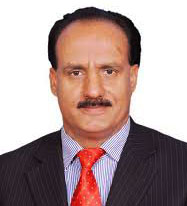
Sardar Shaukat Mehmood Khan
The world in 2026 stands at a crossroads. Unlike past moments dominated by a single crisis, today’s challenges come from many directions at once—geopolitical tensions, fragile economies, climate stress, technological disruption, and rising inequality. Together, these forces are reshaping global governance and testing the institutions that have kept relative stability for decades.
Even in these turbulent times, signs of cooperation endure. The 2026 Winter Olympics in Milan and Cortina d’Ampezzo offered a rare glimpse of global unity, bringing countries together despite political and ideological divides. Moments like these may seem symbolic, but they matter—they preserve channels of dialogue and remind the world of the enduring value of cooperation.
Yet symbolism cannot hide the realities of a deteriorating global security landscape. The war in Ukraine continues to reshape Europe’s strategic map and weaken long-standing security arrangements. NATO has strengthened its deterrence, while the European Union is stepping up as a more assertive geopolitical actor. The United States remains central, balancing its commitments in Europe with growing strategic demands in the Indo-Pacific. Meanwhile, Russia’s prolonged confrontation with the West has deepened divisions and undermined arms control mechanisms.
China’s role is equally complex. Seeking influence without direct confrontation, Beijing increasingly relies on economic leverage, technological progress, and careful diplomacy. This reflects a broader shift toward a multipolar world, where power flows through many channels, challenging traditional notions of leadership and accountability.
The Middle East remains a hotspot of instability. Ongoing conflicts, political fragmentation, and humanitarian crises continue to ripple across the globe. Tensions involving Iran, Israel, and regional powers affect energy security and trade, showing that sustained confrontation carries risks far beyond the region. Diplomacy is no longer optional—it is essential to prevent regional collapse and global disruption.
East Asia also faces serious strategic uncertainties. North Korea, the South China Sea, and Taiwan all represent high-stakes challenges. With multiple major powers holding competing interests, the risk of miscalculation is real. Dialogue, crisis management, and restraint are urgent necessities.
Beyond politics, the global economy faces structural challenges. While trade and travel are rebounding, growth remains fragile. Inflation, rising debt, and fragmented supply chains test both developed and developing economies. Strategic competition increasingly shapes economic policy, risking long-term inefficiency and widening inequality.
Climate change is the era’s most pressing challenge. Rising temperatures, extreme weather, and environmental degradation are reshaping migration, food security, and conflict. Climate stress amplifies existing vulnerabilities, hitting fragile states hardest. How major emitters—especially the U.S., China, the EU, and India—respond will determine whether climate action becomes a source of cooperation or further division.
Technological advances add another layer of complexity. Artificial intelligence, cyber capabilities, and digital surveillance are transforming economies, militaries, and politics. Without global norms, these technologies risk worsening inequality, eroding trust, and destabilizing international relations.
Humanitarian challenges remain intertwined with these pressures. Millions face displacement, exploitation, and human trafficking, highlighting the human cost of conflict, weak governance, and economic disparity. These crises test the credibility of the international community and reveal the limits of existing global responses.
Together, these trends reveal a world in transition. Power is more dispersed, cooperation is conditional, and global challenges demand collective solutions that current frameworks struggle to provide. The decisions of key players—like the U.S., China, the EU, Russia, and regional powers—will shape whether this transition leads to managed competition and stability or prolonged fragmentation and insecurity.
Paths Forward: Recommendations for a Fragile World
To navigate this pivotal moment, practical and coordinated actions are essential:
1. Revitalize Global Institutions
Multilateral organizations like the UN, international financial institutions, and regional bodies must be reformed to reflect today’s realities while preserving their core principles. Strong institutions can restore trust and facilitate collective problem-solving.
2. Stabilize Strategic Competition
Major powers should focus on risk-reduction mechanisms: military-to-military communication, arms control dialogues, and crisis management frameworks, especially in Europe and the Indo-Pacific.
3. Make Climate Action Central
Climate change should be treated as a core strategic issue. Coordinated investments in adaptation, mitigation, and climate finance—especially for vulnerable nations—are critical to preventing future instability.
4. Promote Inclusive and Resilient Economies
Economic policies must reduce inequality, manage debt, and maintain secure but open supply chains. Greater coordination among major economies is key to sustaining global prosperity.
5. Establish Global Norms for Technology
International frameworks for AI, cyber operations, and digital governance must be developed to prevent misuse, reduce uncertainty, and ensure technological progress benefits society as a whole.
6. Strengthen Humanitarian Protection
Displacement, exploitation, and trafficking require stronger laws, cross-border cooperation, and sustained political commitment. Human security is inseparable from global stability.
As 2026 unfolds, the world faces a defining test. The challenge is not only managing crises but also building a resilient and cooperative global order. In an interconnected world, no country can secure its future alone. Balancing competition with cooperation and national interests with shared responsibility will determine whether this turning point becomes a moment of renewal—or the start of deeper instability.

