


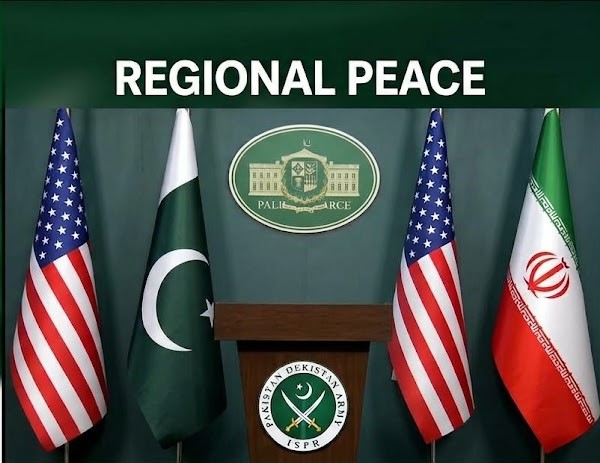
RAWALPINDI; Inter-Services Public Relations (ISPR) Director General Lieutenant General Ahmed Sharif Chaudhry has said that Pakistan would continue to work towards a “negotiated and peaceful outcome” to the conflict between the United States and Iran, stressing that the war should not “expand horizontally or vertically”. “We want that this conflict should not expand horizontally or vertically,” Chaudhry said in an interview with CNN correspondent Ivan Watson on Wednesday, a clip of which was shared by Pakistan Television on X on Friday. On August 7, Pakistan, Saudi Arabia and Turkiye formalized their longstanding strategic relationship through the Makkah Joint Defense Agreement (MJDA), a trilateral security framework that its proponents describe as a defensive arrangement aimed at strengthening collective deterrence, enhancing military cooperation and promoting regional stability. Asked whether Pakistan could continue to act as a neutral broker despite its defense commitments to Saudi Arabia under the Makkah Defense Alliance, Chaudhry said Islamabad had demonstrated its impartiality through its responses to attacks on both Iran and Gulf countries. “I think what Pakistan has been doing is exhibiting that we have been a very honest broker,” he said, adding that Pakistan had been clear about its position with all its partners and friends. He said Pakistan had openly condemned attacks on Iran by Israel and the United States, as well as Iranian attacks on Arab and Gulf countries. “We don’t mince our words. Why? Because we have a stake in regional peace and stability,” he said. “We tell all that nobody benefits from expanding this war.” The military spokesperson’s remarks came amid continued regional tensions and questions over how Pakistan would balance its mediation efforts with its defense commitments to Saudi Arabia. On Pakistan’s military presence in Saudi Arabia, Chaudhry confirmed that Pakistani forces were already in the Kingdom, “The Pakistani troops have been there for decades, in multiple capacities have been there for decades in Saudi Arabia,” he said, pointing to the longstanding diplomatic, political and military ties between the three countries. He said the alliance had not emerged in isolation and was built on sustained relations between the countries. “The Makkah Accord, its actualization and whatever effects it achieves, that will be purely defensive,” Chaudhry said. He declined to provide details about how or when forces would be deployed under the agreement, “How that will be done, which component will go there, how it will be employed, that’s for the operational commanders to decide,” he said, adding that participating countries did not disclose operational details during a military conflict.
7

