


Pervaiz Mughal
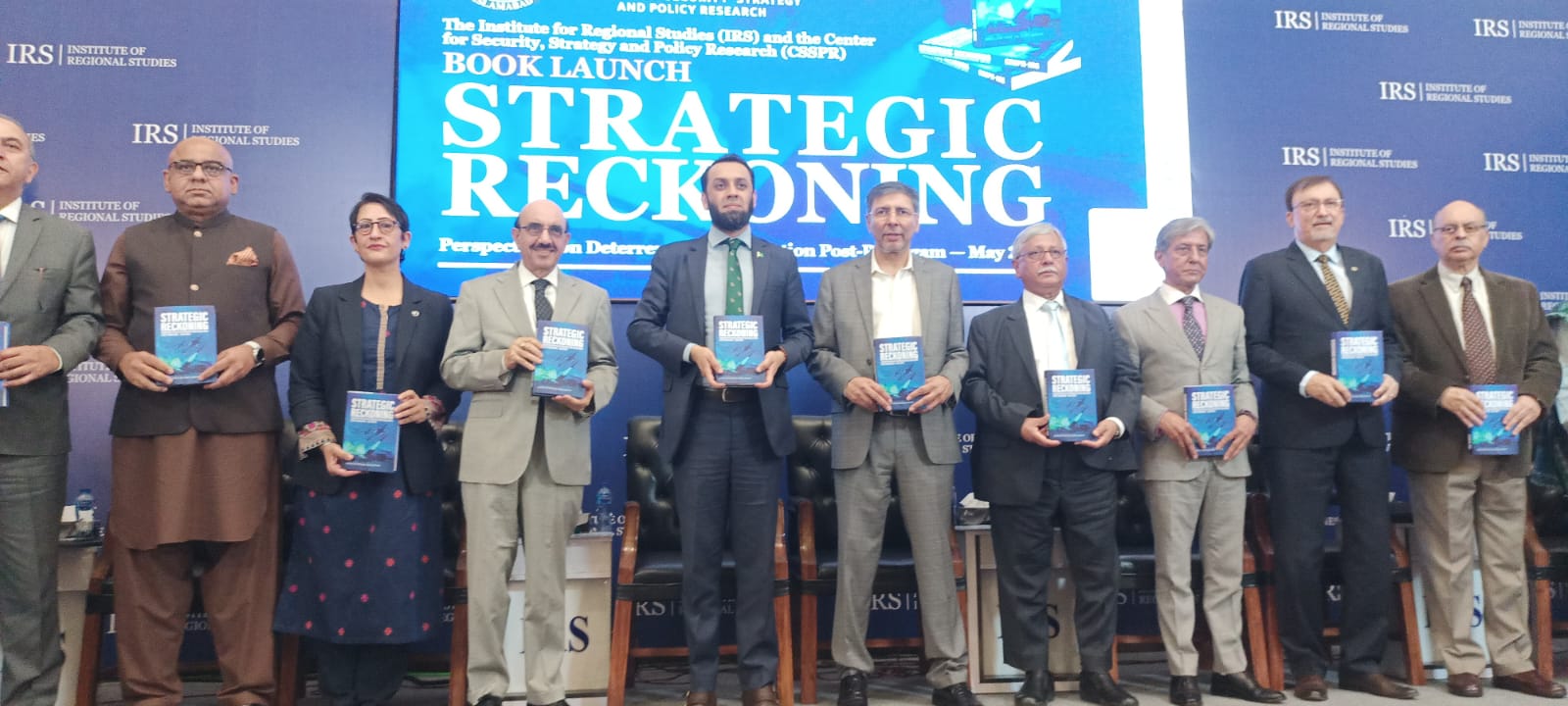
ISLAMABAD: The Institute of Regional Studies (IRS), Islamabad and the Center for Security Strategy and Policy Research (CSPR), a unique and important edited Volume “Strategic Reconning: Detards and Essence Ideas (Post Pahlagam – May 2025). A large number of diplomats, researchers, journalists and government officials attended the event.
The book, whose editor is Dr. Rabia Akhtar, highlights the May 2025 crisis, which is described as the most dangerous tension in South Asia in recent decades. Articles highlight the delicate pin of detention, the risks of increased stress in a limited time and potential destructive consequences. The book also makes it clear that Pakistan took patience despite intense provocations and prevented the crisis from increasing through balanced measures. This “collective accountability” reflects that Pakistan rejected the attempt to normalize extraordinary measures.
Special guest address
Federal Minister for Information Ata Tarar lauded the publication, saying that this book is a very important reference to understand the May 2025 military clash between Pakistan and India.
“I congratulate the IRS, CSPR and all the honorable authors who performed such a timely and deep research work. “Strategic Reconing” is not just a scholarly effort, but an essential reflection of a very dangerous crisis in South Asia’s recent history, “he said.
Expert feedback
Ambassador Johar Saleem, President IRS, criticized India’s oppressive policies, saying that India’s behavior creates instability in the region and weaken institutions like SAARC. According to him, India’s strategic arrogance policy can lead it to diplomatic isolation.
Lieutenant General Khalid Ahmed Kidwai, Advisor National Command Authority, said that the manufacture, practical skills and the Army Rocket Force Command reflects the country’s credible defense structure. He emphasized that Pakistan restored detergent and strategic balance through coordinated operations.
Ambassador Masood Khan, former President Azad Jammu and Kashmir, termed the Pahalgam attack a turning point and said that the Kashmir issue was the main element of unrest in South Asia.
Dr. Rabia Akhtar described the crisis as a “new ambiguity” in which India tried to normalize the attacks. He termed Pakistan’s balanced reaction as responsible for India’s adventures.
Air Commodore (R) Khalid Banuri highlighted timely and effective operations of Pak Air Force in the crisis, which thwarted India’s ambitions.
Dr. Salmi Malik highlighted the negative effects of the crisis on other countries in the region, such as economical loss, refugee problems and security risks, and emphasized the need for multilateral mechanisms.
Ijaz Haider highlighted the role of the Indian media and said that his sensational and misleading reporting added to the tension.
Exquisite launch of “Strategic Reconing: Detardic Reconing: Detards and Essence (Post Pahalgam – May 2025)” by IRS and CSPR
168

