


By Saeed Chaudhry
ISLAMABAD:
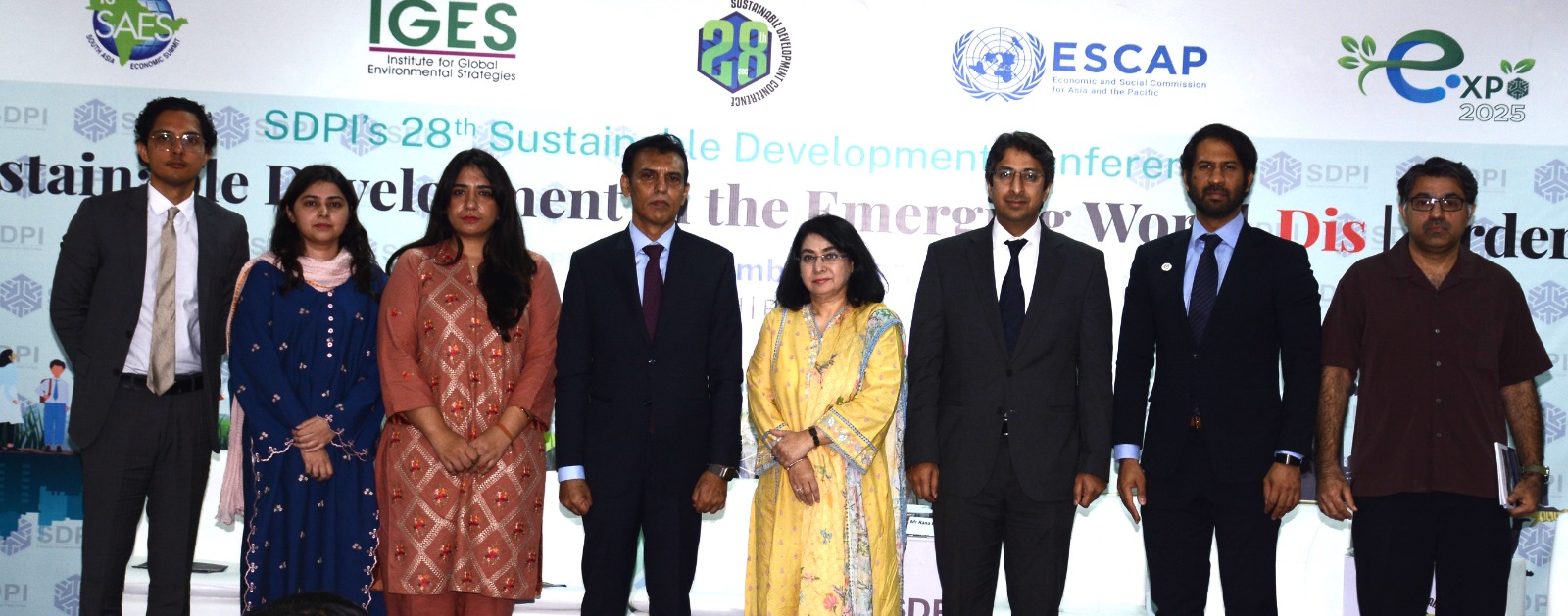
Speakers at a key roundtable during the 28th Sustainable Development Conference (SDC), organized by the Sustainable Development Policy Institute (SDPI), have proposed the creation of a new sub-regional bloc to address regional challenges as SAARC remains largely inactive.
The roundtable, titled “South Asia in a Changing World,” emphasized the urgent need for localized mechanisms to tackle shared problems of economic disparity, climate change, and regional isolation.
In his opening remarks, SDPI Executive Director Dr. Abid Qaiyum Suleri said that renewed discussions about reviving regional cooperation mirror the recent call by a Bangladeshi minister to reinvigorate SAARC. “Despite its challenges, SAARC remains a necessary platform for shared solutions,” he noted.
Former government advisor Imran Shauket described SAARC as “on life support,” stressing that South Asia must pursue economic integration even in the absence of political consensus. Similarly, U.S.-based South Asia expert Michael Kugelman called SAARC “dead in water but still revivable,” pointing out that it remains one of the few regional bodies where all members are treated equally.
Pakistan Regional Economic Forum Chairman Haroon Sharif urged the region to “move beyond outdated thinking” and focus on self-reliance. “The era of aid is over; South Asian nations must stand on their own,” he said.
Brig (R) Feroz Hassan Khan observed that Pakistan’s main challenge lies not in its inability to access regional opportunities but in sustaining them over time. Kugelman added that Pakistan faces growing regional isolation, citing Sri Lanka’s active diplomacy and Bangladesh’s uncertain political future as key contrasts.
Later, at another session titled “Strengthening the Role of Parliament in Public Debt Management,” National Assembly Standing Committee Chairman Naveed Qamar warned that Pakistan’s mounting debt had reached “unsustainable levels.” He urged Parliament to enforce fiscal discipline, while Dr. Farooq Sattar emphasized prevention as the best remedy.
Adviser to the KP Finance Ministry Muzzammil Aslam called for an independent debt-reporting authority, while the Finance Ministry’s Director General (Debt) Mohsin Mushtaq highlighted Pakistan’s adherence to IMF-aligned transparency standards.

At a parallel discussion on “Transformative, Sustainable, and Equitable Energy Transition,” PPIB Director Faisal Sharif stressed the need to mobilize climate finance and boost clean-energy adoption, noting Pakistan’s goal of cutting projected emissions by 50% by 2035 and achieving a 62% renewable energy mix by 2030.
Bangladeshi Ambassador to Thailand Faiyaz Mirshid Kazi underlined the importance of affordable and sustainable energy for regional development, while ESCAP’s Subathirai Sivakumaran pointed to Pakistan’s dependence on imported fuels as a major obstacle to energy security.
In a related report launch, former National Security Adviser Dr. Moeed Yousuf urged Pakistan to embrace “cooperative geo-economics” by building regional interdependence rather than military posturing. Former Foreign Secretary Aizaz Ahmad Chaudhry and Lt-Gen (R) Aamir Riaz echoed the need for pragmatic economic diplomacy and balanced national security.
At another high-level dialogue, PM’s Coordinator on Commerce Rana Ihsaan Afzal termed climate change a “national economic emergency,” calling for the alignment of climate and economic policies. Experts from IRENA, ESCAP, and CVF stressed that over $190 billion annually is needed to help South Asia confront intensifying climate risks.
Dr. Fahmida Khatun of Bangladesh’s Centre for Policy Dialogue concluded that effective regional cooperation and global support are essential to achieving sustainable climate resilience.

