


ISLAMABAD (Staff Reporter):
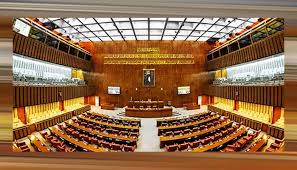
The Senate of Pakistan on Monday passed the 27th Constitutional Amendment Bill, 2025, with a two-thirds majority amid loud protests from the opposition benches. A total of 64 senators voted in favour of the bill, while none voted against it.
The report on the amendment was presented by Senator Farooq Hamid Naek, Chairman of the Senate Standing Committee on Law and Justice. The joint meeting of the Senate and National Assembly committees on law and justice had earlier approved the bill with minor modifications, despite an opposition boycott.
Presiding over the session, Chairman Senate Syed Yousaf Raza Gilani allowed Naek to brief the House on the deliberations. He said the proposed amendment went through extensive review, incorporating suggestions from various members and special invitees. “The discussions lasted for two full days, and the bill has been refined through collective input,” Naek noted, adding that the opposition was also invited to participate in the process.
However, opposition senators belonging to the Pakistan Tehreek-e-Insaf (PTI) staged a strong protest inside the chamber, tearing up copies of the bill and chanting slogans in front of the chairman’s dais. Senator Hamid Khan alleged that the passage of the bill was influenced by establishment pressure and accused the government of bulldozing constitutional reforms without consensus.
Key Features of the 27th Amendment
The 27th Constitutional Amendment Bill introduces wide-ranging reforms in Pakistan’s judicial, administrative, and fiscal structures:
-
Federal Constitutional Court (FCC): The proposed FCC will replace the existing Constitutional Bench, ensuring equal representation from all provinces, including the Islamabad High Court.
-
Judicial Eligibility: Judges must have five years of High Court experience (reduced from seven).
-
Seniority Rule: Existing Supreme Court judges will retain their seniority; new appointees’ seniority will be based on their date of appointment.
-
Judicial Commission Representation: Reserved seats maintained for women, non-Muslims, and technocrats.
-
Suo Motu Oversight: FCC to review and approve the Supreme Court’s suo motu powers.
-
Article 199 Reforms: Interim stay orders in tax cases limited to six months to curb case backlog.
-
Judges’ Transfers: Transfer process moved from the President’s office to the Judicial Commission of Pakistan, with parliamentary and civil society input.
-
Presidential Immunity: Lifetime immunity approved, except when the former president holds public office again.
MQM, PPP Support Judicial and Governance Reforms
MQM parliamentary leader Senator Faisal Ali Subzwari praised the bill, saying it addressed long-standing gaps in judicial accountability and local government empowerment. He clarified that MQM’s position was not a rollback of the 18th Amendment but an effort to “strengthen democracy by ensuring that provincial rights reach the people directly.”
Subzwari also urged fiscal empowerment for local governments, citing the unimplemented Provincial Finance Commission (PFC) and uneven distribution of the National Finance Commission (NFC) Award. “We are not reducing provincial shares — we are ensuring accountability and fiscal justice,” he said.
PPP Senator Rubina Khalid defended her party’s support for the amendment, stressing that legislative evolution was necessary for strengthening democracy. “This law, like all others, must evolve. Zulfiqar Ali Bhutto was a victim of judicial injustice, but we never gave up on reform,” she said.
Khalid urged lawmakers to focus on citizens’ real struggles. “Floods, poverty, and unemployment are the real challenges — yet our political debates ignore them,” she added. She emphasized that the reforms would “protect both the rights of the people and the integrity of the state.”
Maulana Atta ur Rehman of JUI-F criticized the lack of inclusivity in national decision-making and reminded the House of Quaid-e-Azam’s vision of unity and equality, lamenting that Pakistan had drifted from that founding ideal.
During the session, the Chief Minister of Balochistan and the Mayor of Karachi attended as special guests in the visitors’ gallery, symbolizing provincial involvement in the constitutional deliberations.

