


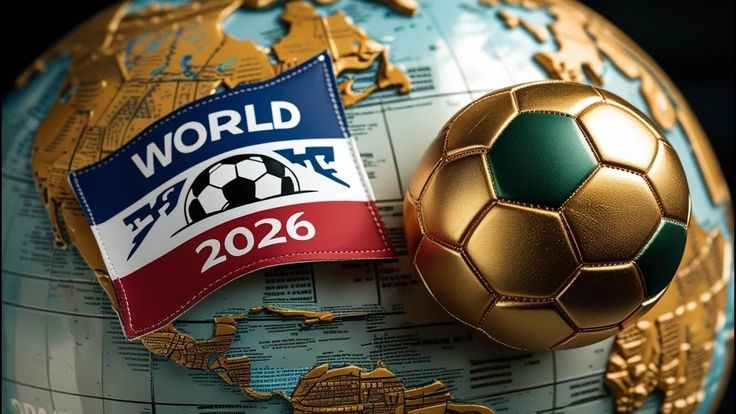
FIFA World Cup 2026: United States Prepares for Historic Global Football Spectacle in June–JulyExpanded 48-team tournament across North America to redefine football’s global reach, economic impact, and international unityBy Sardar Shaukat Mehmood Khan
Washington / Islamabad
The United States, in partnership with Canada and Mexico, is rapidly advancing preparations to host the FIFA World Cup 2026, scheduled for June and July 2026. Marking the first expansion of the tournament to 48 national teams, this edition promises to redefine the scale, inclusivity, and economic impact of the world’s most watched sporting event.
The FIFA World Cup has transcended sport to become a global cultural phenomenon. With three host countries collaborating — the U.S., Canada, and Mexico — the 2026 edition is poised to deliver far greater diversity, competitive balance, and fan engagement than any previous tournament.
Strategic Host Cities and World-Class Infrastructure
In the United States, a total of 11 cities have been designated as match venues. These include New York/New Jersey (MetLife Stadium), Los Angeles (SoFi Stadium), Dallas (AT&T Stadium), Miami (Hard Rock Stadium), Atlanta (Mercedes-Benz Stadium), Seattle (Lumen Field), San Francisco Bay Area (Levi’s Stadium), Houston (NRG Stadium), Boston (Gillette Stadium), Kansas City (Arrowhead Stadium) and Philadelphia (Lincoln Financial Field).
Cities have fast-tracked upgrades to transportation networks, digital connectivity, fan zones, accommodation capacity, and public safety systems to meet FIFA’s stringent standards. Local authorities expect these improvements to have long-lasting benefits for residents and visitors long after the tournament concludes.
Economic Powerhouse: Billions in Growth and Opportunity
Economic analysts predict that the World Cup 2026 will generate tens of billions of dollars in direct and indirect economic activity across North America. This financial stimulus is expected to benefit sectors such as:
-
Tourism and hospitality, with millions of international and domestic visitors
-
Airlines and ground transportation
-
Retail and small business growth
-
Technology and event services
-
Security and public infrastructure development
Experts emphasize the multiplier effects of global sporting events, noting that host cities often see increased long-term investments in urban development, international visibility, and workforce expansion.
Football’s Growing Footprint in the United States
While football (soccer) has long been the world’s most popular sport, its rise in the United States has accelerated in recent years. The 2026 World Cup is expected to:
-
Boost youth participation and academy enrollments
-
Strengthen domestic leagues such as Major League Soccer (MLS)
-
Inspire a new generation of American football talent
-
Enhance global football partnerships for coaching, scouting, and sports science
Local leagues and grassroots organizations are already leveraging World Cup momentum to host community tournaments, training clinics, and educational outreach programs.
Global Media and Broadcast Engagement
FIFA has outlined an extensive media accreditation system to enable comprehensive coverage, welcoming journalists, photographers, and broadcasters from around the world. Broadcasters are deploying advanced technologies, including:
-
4K and 8K live feeds
-
Augmented reality match analysis
-
Multi-angle fan engagement platforms
-
Real-time social media integrations
With an expected viewership in the billions, World Cup 2026 media rights and coverage plans rank among the most ambitious in sporting history.
Safety, Technology, and Environmental Responsibility
Security remains a top priority for host cities and FIFA, with collaborative planning involving federal, state, and local agencies. Key measures include:
-
Advanced crowd-management systems
-
AI-assisted surveillance and threat detection
-
Digital ticketing and biometric access control
-
Integrated emergency response networks
Sustainability initiatives are equally emphasized, with efforts to reduce carbon emissions, increase renewable energy use in stadium operations, and promote eco-friendly public transportation choices for fans.
A Global Celebration Beyond Sport
As the countdown approaches June 2026, the FIFA World Cup is shaping up to be more than a competition; it is expected to be a global celebration of cultural diversity, unity, and sporting excellence. Delegations from six continents will converge on North America, representing the pinnacle of football achievement and international camaraderie.
For fans, players, officials, and nations worldwide, the World Cup 2026 symbolizes the transformative power of sport to inspire, connect, and elevate humanity on the world stage.

