


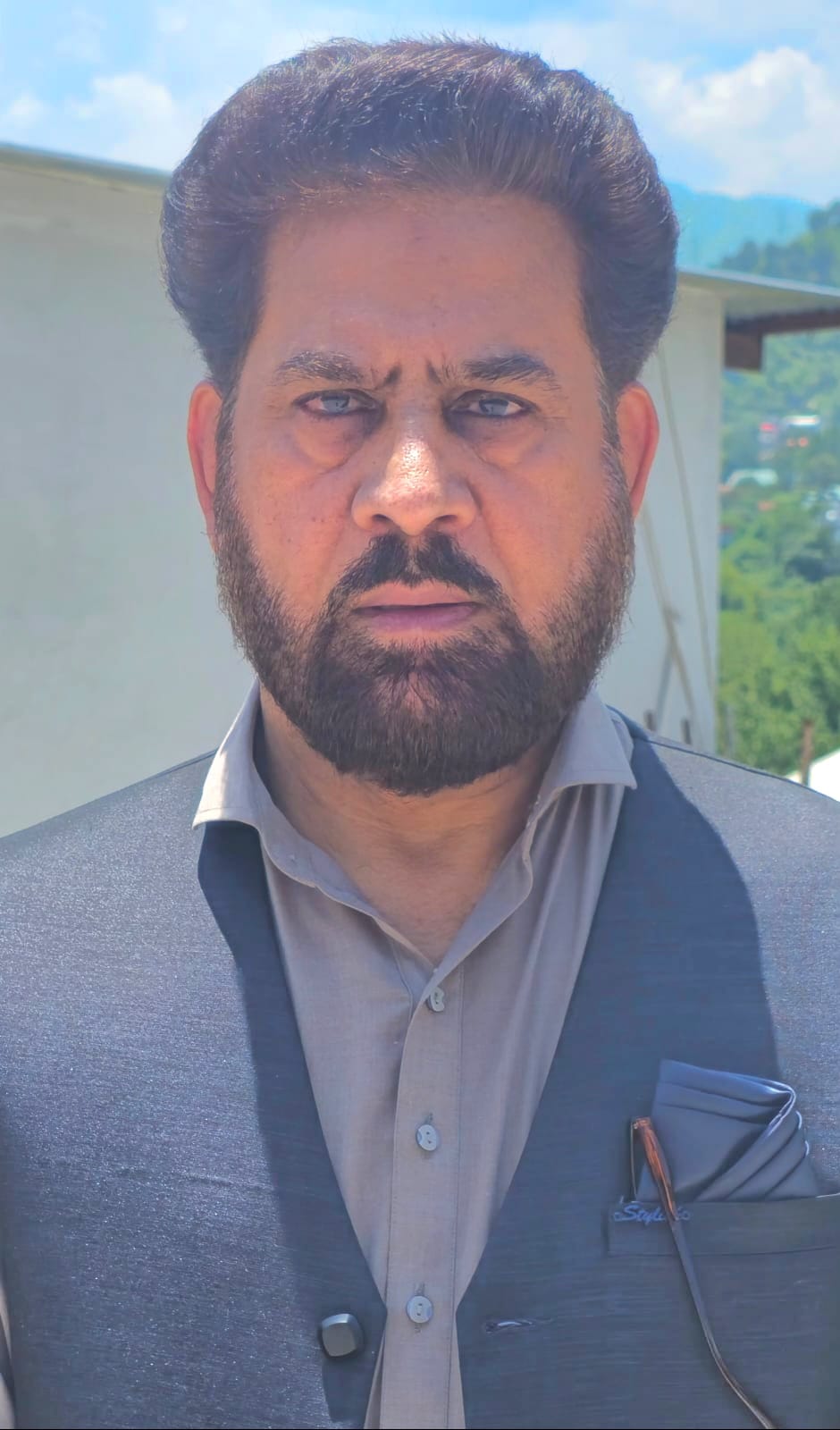
Syed Manzoor Ahmed Shah
At the time of independence of India and Pakistan in 1947, Rulers of 548 Princely states were advised by the then Viceroy to either join India or Pakistan, keeping in view the wishes of their peoples and the geographical location. The Kashmiri Muslims had two strong reasons to join Pakistan: their numerical preponderance (80% of the population) and geographical contiguity. However, the Indian leaders coerced the Non-Muslim Ruler of the State to accede to India (Contrary to Independece Act of British India). The Kashmiri Muslims revolted, liberating a large tract of the State and established Azad (free) Government of Jammu & Kashmir and Gilgit Baltistan. India ran to the United Nations for intervention, which rejected the Indian claim on the State and passed various resolutions, supporting the Kashmiris’ right of self-determination. The resolution of January 5, 1949 reads:“The question of accession of the State of Jammu & Kashmir to India or Pakistan will be decided through the democratic method of a free and impartial plebiscite”.The UN Security Council reiterated the right of self-determination of Kashmiris in various resolutions, including of 1951 and 1957, as reproduced below:-“Observing that the Governments of India and Pakistan have accepted the provisions of the United Nations Commission for India and Pakistan resolutions of 13 August, 1948, and 5 January, 1949, and have reaffirmed their desire that the future of the State of Jammu and Kashmir shall be decided through the democratic method of a free and impartial plebiscite conducted under the auspices of the United Nation.“……. the convening of a Constituent Assembly as recommended by the General Council of the “All Jammu & Kashmir National Conference” and any action that Assembly might attempt to take to determine the future shape and affiliation of the entire State or any part thereof would not constitute a disposition of the State in accordance with the above principles”. (No: 91 – March 30, 1951)“The final disposition of the State of Jammu & Kashmir will be made in accordance with the will of the people expressed through the democratic method of a free and impartial plebiscite conducted under the auspices of the United Nations”. (No: 122 – January 24, 1957)India agreed to hold plebiscite in the State and its leaders made commitments at least more than forty times to this effect. However, they just wanted to gain time and were not sincere in this regard. They started talks on Kashmir whenever pressure was put on India and that again as a dilatory tactic. Pakistan and India fought three wars on the issue and in the wake of each, India promised to resolve the issue, but did nothing on the ground.An inordinate delay in implementing the UN resolutions on Kashmir, repeated farcical, sham elections in the State as well as the wave of democracy, which swept the globe in 1980s, brought the people of Indian Occupied Kashmir (IOK) on the streets, agitating for their right of self-determination. Since India endeavoured to kill their spirit for freedom by force, Kashmiris were compelled to take up arms. To break the will of Kashmiris, India has deployed over 7 hundred thousand soldiers fully armed and with unlimited powers under the draconian Kashmir specific laws. They have wreaked havoc there. The atrocities inflicted on the hapless Kashmiris have been documented by Indian and international human rights organisations, like Amnesty International, Human Rights Watch and others.The delegation of the European Parliament, which visited IOK, called it the most beautiful prison in the world. In its report, the delegation condemned in unequivocal terms the state terrorism against Kashmiris, urging the need for international human rights organisations to be given access to IOK and called upon the Indian government to allow better monitoring of all detainees. The delegation also recommended appointment of a Rapporteur by the European Parliament on Kashmir.The Indian leaders usually make devious statements to hoodwink the international community. Some time the Indian leaders accuse Kashmiris of terrorism but, in fact, the UN Charter, the Universal Declaration of Human Rights 1948 and other UN declarations permit people to fight for their right of self-determination. Therefore, the freedom movement of Kashmiris can’t be dubbed as terrorism. As far as the allegation of the cross border terrorism is concerned, Pakistan has repeatedly proposed to enhance the role of the UN Observers on the Line of Control (LOC), but India didn’t agree. The respectable burials and ever expanding graveyards in the occupied territory also speak volumes in support of their indigenous movement. Moreover, a foreign sponsored movement cannot sustain for such a long time as 38 years with equal zeal and unflinching commitment. Various analysts, Indian and international, have also repudiated the Indian claim.India is also against third party intervention, stating that the issue can be resolved bilaterally under the Simla Agreement. The Simla Agreement was signed on July 2, 1972, but India has done nothing to resolve the issue in the last 34 years, rather it has rebuffed all the overtures made by Pakistan to this effect. Moreover, the Shimla Agreement neither alters the disputed status of Kashmir nor precludes the role of the United Nations, as explained below:-Para 1 (i) of the Agreement – states that the UN Charter shall govern relations between the parties.(Continue) Para 1 (ii) – does not exclude the UN for a peaceful settlement.Para 1 (iv) – refers to the Kashmir issue as the basic issue and cause of conflict between the two nations.Para 5 (ii) – protects the recognized positions of both Pakistan and India and differentiates the “Line of Control” from the international borders.Para 7 – describes the Kashmir dispute as one of the outstanding issues.Articles 34 and 35 of the UN Charter – empower the Security Council to investigate any dispute, without subservience to any bilateral agreement.Article 103 – obligations under the Charter take precedence over obligations under a bilateral agreement.The issue is on the UN agenda. The presence of the UN Military Observers Group in India and Pakistan also confirms the UN involvement in the dispute.Unprecedented atrocities perpetrated by the Indian security forces in IOK as well as the ever swelling military power of India have made the Indian Sub-Continent one of the most dangerous places in the world, as described by quite a few world leaders including former US President Bill Clinton.Present president Donal Trupm who offered mediation on dispute of kashmir which Pakistan agreed and India disagreed.UNGS Ontonio Guttres,and after 2019 Agust 5 Almost all world leaders emphasized to resolove kashmir issue as per UN resolutions are testimoniea persuading India to give kashmiris right to self determination. India, which is jockeying for a permanent seat in the UN Security Council should remind itself about the UN Security Council resolutions on Kashmir, which it has persistently defied with impunity. Similarly, the world community should also recognize its responsibility under the UN Charter to resolve the Kashmir issue. If the UN resolutions on Iraq, Kosovo and East Timor,South Sudan, can be implemented, why not the resolutions on Kashmir?The world has shrunk and a regional conflict can engulf the whole world, especially because India and Pakistan are both nuclear powers and recently fought a four day war in May 2025 narrowly escaping a neclear confrontation that could have devastated whole world. Therefore, the world community should not ignore the plight of the Kashmiris and possible nuclear war on Kashmir. Kashmiris are writing their tales of woe With thier blood. UN and Western Piwers Including China and Russia should come forward and stop the injustice meted out to Kashmiris at the hands of the Indians. Dr. Martin Luther King very aptly remarked: “The ultimate tragedy is not the oppression and cruelty by the bad people, but the silence over that by the good people”.

