


SANTIAGO, Chile:
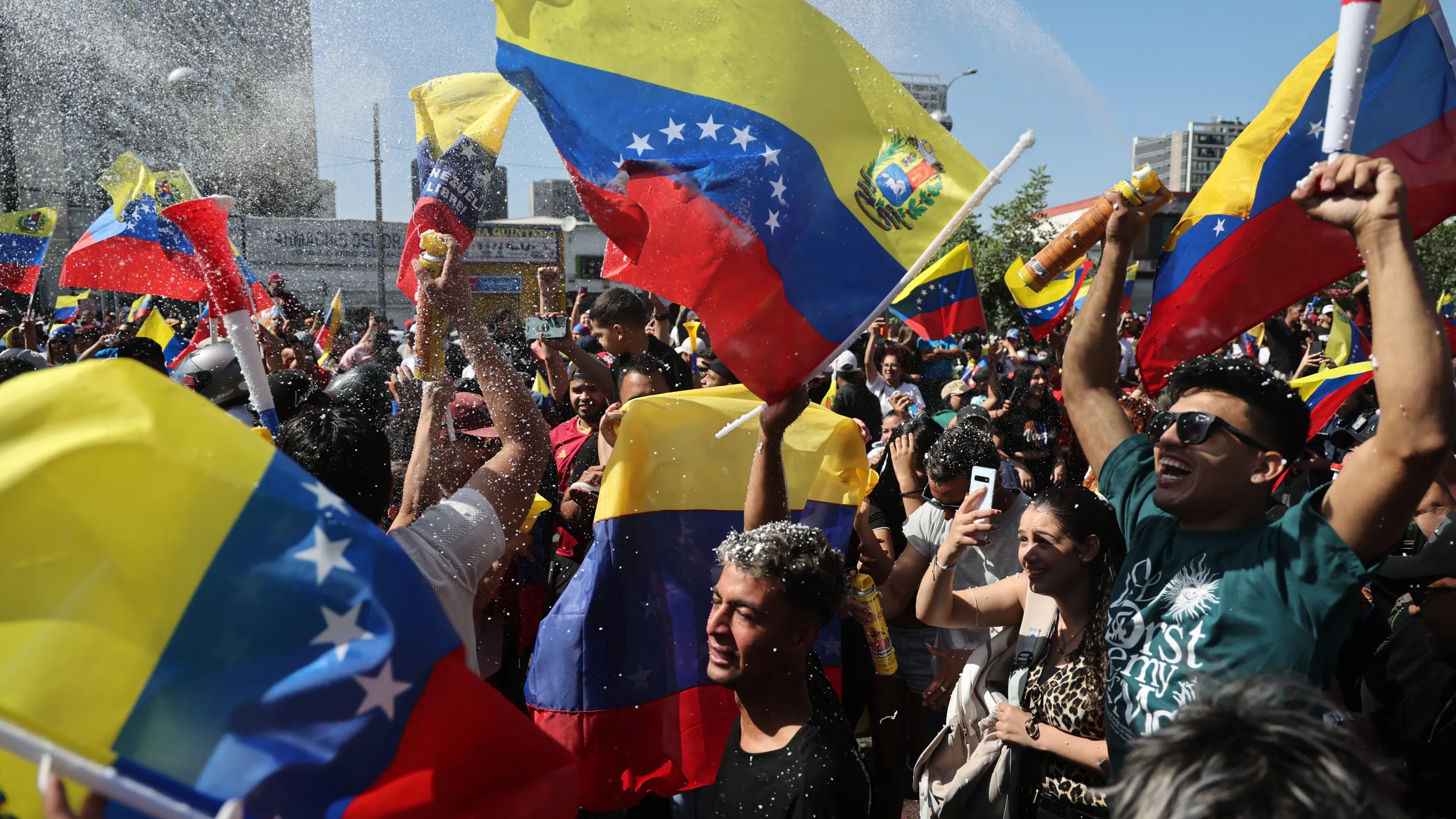
Chile’s capital awoke to scenes of jubilation early Saturday as cheers echoed through residential neighborhoods, reflecting a surge of hope among the country’s Venezuelan diaspora after reports emerged from Caracas about a U.S.-led operation targeting President Nicolás Maduro.
More than 1,000 Venezuelans gathered at Parque Almagro in Santiago, embracing, chanting, and shedding tears as news spread rapidly through social media and diaspora networks. For many, the moment symbolized a long-awaited possibility of political change in their homeland.
“I was with them in the park all day,” said Mary Montesinos, 49, Chile representative of Voluntad Popular, one of Venezuela’s main opposition parties.
“The feeling was that we would finally go home, that the regime would collapse and democracy would return,” she said.
However, Montesinos and other community leaders were quick to urge restraint.
“They may have captured Maduro, but the regime itself hasn’t fallen,” she cautioned. “It has been built over 25 years. Dismantling it will take time.”
Venezuela remains at the center of one of the worst refugee crises in modern Latin American history. According to the United Nations Refugee Agency (UNHCR), nearly 23 percent of Venezuela’s population has fled the country as the prolonged economic and political crisis deepened. By the end of last year, up to 2,000 people were still leaving daily.
Chile has become a major destination for Venezuelan migrants. Montesinos herself arrived in 2003 with her Chilean husband, at a time when Venezuelans were virtually absent from the country. Early diaspora gatherings were small and often included Chileans who had once lived in Venezuela, improvising traditional dishes with substitute ingredients.
Today, Venezuelan culture is deeply woven into Chilean society. From queso llanero and Venezuelan corn flour stocked nationwide to arepas and tequeños served even in Punta Arenas, Chile’s southernmost city, Venezuelan identity has spread across the country.
Successive waves of migration have brought Venezuelans south, many passing through other Latin American nations in search of work. During the COVID-19 pandemic, border closures forced thousands to cross illegally on foot through harsh desert terrain.
Chile’s 2024 census confirmed Venezuelans as the largest foreign population in the country of 18.5 million people, numbering 669,000, far surpassing the second-largest migrant group, Peruvians, at 233,000. The community is predominantly young, with only 5 percent over the age of 45.
Yet the influx has also sparked backlash.
“When crimes are reported, the nationality is mentioned only if the suspect is foreign,” Montesinos said, adding that this has fueled negative perceptions of Venezuelan migrants.
The issue has become a flashpoint in Chilean politics. President-elect José Antonio Kast, a far-right figure, won December’s election after linking illegal migration to rising crime and insecurity. During his campaign, Kast repeatedly warned undocumented migrants to leave Chile before his inauguration on March 11.
An estimated 334,000 Venezuelans are currently living in Chile without legal status. Kast has proposed detention centers, border walls, and aggressive deportation measures. He openly welcomed the U.S. intervention in Venezuela, calling it “great news.”
Outgoing President Gabriel Boric, however, struck a more cautious tone, warning:
“Today it’s Venezuela; tomorrow it could be any other country.”
For activists like Roberto Becerra, 43, who fled Venezuela in 2017 over safety concerns tied to his political activities, the struggle continues from abroad. He helped organize three voting centers in Santiago for Venezuela’s 2024 presidential election, an election widely disputed by international observers despite Maduro’s claimed victory.
“Our role from Chile is to make visible what is happening in Venezuela,” Becerra said.
“We are the voice of those who cannot speak. Inside Venezuela, silence is imposed, but here we can raise our voices.”
Despite lingering uncertainty, nostalgia and hope remain powerful forces within the diaspora. Montesinos says she would return under the right conditions.
“If there was a call to return and help rebuild Venezuela, I would go,” she said.
“To be part of rebuilding that story would be incredibly inspiring.”

