


Dr. Asmaa Selim
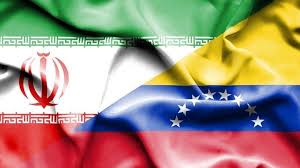
Some local and regional political analysts are confused while discussing the American aggression against Venezuela, entangling it in two issues or hypotheses. The first is linking what happened there with the intentions towards Iran, relying on an important but not sole basis: Venezuela has the largest oil reserve in the world, and by controlling it, America ensures – in case it attacks Iran and closes the Hormuz and Bab-el-Mandeb straits – that there won’t be a significant impact on energy supplies.
The second issue or hypothesis is about the new military doctrine known as “Shock and Silence”, a tactical development of the “Shock and Awe” doctrine, but differs in goals and means.
Firstly, regarding the validity of the first hypothesis:
in detailed analysis from a comprehensive geopolitical perspective, it’s an important and correct element, intersecting with major strategies long accumulated by successive American administrations. But with realistic critical evaluation:
_Validity of the hypothesis:_ The hypothesis is partially correct, built on clear geopolitical logic: linking Venezuela (world’s largest oil reserve) with risks of Iran closing Hormuz and Houthis closing Bab-el-Mandeb in case of a wide conflict is a logical strategic thinking for America to secure fast and stable energy alternatives.
_Positives of the hypothesis:_
An interconnected analysis of geography, politics, and economy, the essence of American strategic thinking.
Shows understanding of the new American doctrine of securing alternatives and preemptive control of energy junctions. Links seemingly separate files managed in one operations room.
_But negatives and criticisms:_
Overdirect linking: Despite Venezuela’s importance, the American strategy isn’t only about securing an energy alternative in case of war, but also about regime change and undermining Russia and China’s allies in Latin America.
Exaggerating the oil market’s response speed: Even if America controls Venezuela, restarting oil production and export requires infrastructure and time after long halt due to suffocating sanctions – not an instant alternative in a sudden war. Ignoring other global energy sources like America itself (currently largest producer) and the Gulf. Venezuela isn’t the sole savior.
Secondly, the second hypothesis about “Shock and Silence” doctrine:*
It’s a tactical development of “Shock and Awe”, but differs in goals and means. This doctrine targets precise, surprising strikes at strategic targets, aiming for big military/political impact without declaring it loudly. The idea is to silently dismantle the enemy’s capabilities, avoiding full confrontation.
But can it work against Iran?_ The answer’s complex. Iran isn’t an easy target – a security-interconnected state with a decentralized war strategy via regional allies like Hezbollah, Houthis, and Popular Mobilization Forces. Any strike against it, even silent, is hard to pass without response. Iran’s deterrence relies on exposing any aggression loudly, emptying “silence” of its meaning. Iran has advanced cyber, drone, and asymmetric attack capabilities, making it able to detect and respond to “silent” strikes.
To sum up, These analyses and hypotheses are based on precise thinking and proper linking, but should reduce determinism. Venezuela’s used as an American strategic card on several fronts, but considering it the decisive “Plan B” in case of Iran war needs more scrutiny, especially considering time needed to restart its production and its distant geography from conflict centers.

