


76
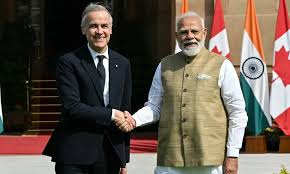
Islamabad : Pakistan has expressed serious concern over the recently concluded long-term uranium supply agreement between India and Canada, as well as potential cooperation in small modular reactors and advanced nuclear technologies.
In an official statement, Mr. Tahir Andrabi, Spokesperson for the Ministry of Foreign Affairs, described the arrangement as a country-specific exception in civil nuclear cooperation, raising significant non-proliferation and regional security concerns.
The statement recalled the historical context, noting that India’s 1974 nuclear test—which used plutonium from a Canadian-supplied reactor intended for peaceful purposes—led directly to the creation of the Nuclear Suppliers Group (NSG). Pakistan highlighted the irony of India now receiving preferential access through selective agreements, despite not placing all civilian nuclear facilities under International Atomic Energy Agency (IAEA) safeguards or providing binding non-proliferation assurances.
Pakistan warned that assured external uranium supplies could allow India to divert domestic uranium reserves for military purposes, potentially expanding its fissile material stockpiles and accelerating nuclear arsenal growth, further exacerbating strategic asymmetries in South Asia.
The Ministry emphasized that such selective arrangements risk undermining the international non-proliferation regime and weakening the credibility of global export control frameworks. Pakistan reiterated its principled stance that civil nuclear cooperation must follow a non-discriminatory, criteria-based approach applicable to all states not party to the Nuclear Non-Proliferation Treaty (NPT), cautioning that exceptions threaten regional and global peace and security.

