



Raja Atif Raza
Every day, Pakistan’s economy runs on fuel. Yet, despite having oil reserves, the country often feels the pinch at the pump. Rapid population growth, industrial expansion and the increasing demands of transport have pushed fuel consumption higher than ever. Meanwhile, domestic oil production remains limited. Estimates show that Pakistan produces roughly 70,000 barrels of crude oil per day, meeting only 15 to 20 percent of the national demand. The rest comes from imports.
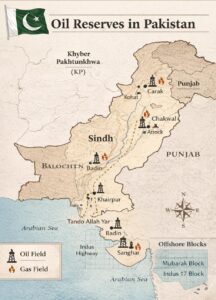
This dependence makes Pakistan highly vulnerable. Global oil price hikes or conflicts in energy-producing regions immediately impact the economy. Inflation rises, import bills climb and foreign exchange reserves are strained. The situation becomes more worrying when we realize that Pakistan’s strategic petroleum reserves cover only a few weeks of demand. By contrast, most industrialized countries maintain reserves for 60 to 90 days. Any disruption in global supply chains could trigger an energy crisis.
Despite these challenges, Pakistan has opportunities. Recent years have seen potential oil and gas reserves identified in Khyber Pakhtunkhwa, Sindh and offshore blocks in the Arabian Sea. With proper investment and modern technology, domestic production could increase. Progress has been slow due to security concerns, inconsistent policies, regulatory delays and an uncertain investment climate. Security issues in Balochistan and other regions have limited international companies’ interest, while policy changes have affected investor confidence.
To secure its energy future, Pakistan must act on multiple fronts. In the short term, it needs to expand strategic reserves, diversify import sources and promote energy efficiency. Over the long term, the focus should be on developing local resources, investing in offshore exploration, modernizing refineries and expanding alternative energy sources. Pakistan has significant solar and wind potential, which could reduce dependence on imported oil if developed properly.
Stability in energy policy, transparent regulations and a business-friendly environment are essential. Local and international companies need confidence to invest in long-term projects. Pakistan has both the resources and geographic potential, but the real challenge is turning these possibilities into reality. With consistent strategy and strong implementation, the country can meet its energy needs while laying the foundation for long-term economic stability.

