


36
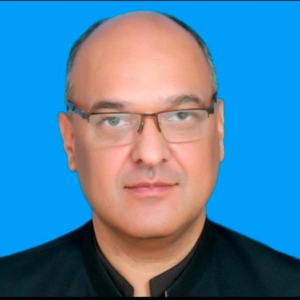
Abdul Basit Alvi
The real anti-state face of the Awami Action Committee has been exposed, and what has emerged from behind the curtain of its so-called pro-people rhetoric is nothing short of a chilling betrayal of the people of Azad Jammu and Kashmir (AJK), the state of Pakistan, and the sacred institution of the Pakistan Army. To fully comprehend the magnitude of this exposure, one must first understand the origins of the Joint Awami Action Committee, for it is only by appreciating what it was meant to be that one can truly grasp the tragedy of what it has become. The Joint Awami Action Committee was originally formed with a noble and ostensibly benign purpose: to address the genuine, everyday issues of the common people of AJK. These were not grand or seditious ambitions; rather, the committee was envisioned as a platform for ordinary citizens—shopkeepers, teachers, daily wagers, small farmers, and retired government servants—to raise their voices against the mundane but painful problems that afflicted their daily lives. Issues such as the potholed roads that swallowed vehicles during the monsoon season, the chronic power outages that left villages in darkness for eighteen hours a day, the lack of clean drinking water that led to waterborne diseases, the crumbling healthcare infrastructure where patients were turned away for lack of basic medicines, and the rampant unemployment that forced young men to migrate far from their families in search of meager earnings—these were the kinds of problems that the Awami Action Committee was supposed to tackle. It was supposed to be a pressure group of a constructive kind, one that would submit memorandums, hold peaceful demonstrations, engage with the AJK government, and demand accountability from elected representatives. In its early days, the committee enjoyed a degree of public sympathy and moral authority precisely because it positioned itself as non-partisan, patriotic, and focused on the welfare of the common man. It spoke the language of rights but within the framework of loyalty to Pakistan, acknowledging that AJK’s destiny was inextricably linked with the Islamic Republic. However, as time passed, a slow but sinister transformation began to take place within the ranks of the Awami Action Committee. The leadership changed, new faces emerged with more radical and ambiguous agendas, and the discourse shifted away from potholes and power cuts toward something far more dangerous. The committee began to criticize not just specific policies but the very structure of the state. It started questioning the relationship between AJK and Pakistan, not as a matter of academic debate but as a prelude to outright hostility. The once constructive pressure group morphed, step by step, into an anti-state, anti-Pakistan Army, and anti-Pakistan pressure group.
Today, Awami Action Committee no longer speaks for the common people of AJK; it speaks against the very institutions that protect those people. The mask of civility has been torn away, and what lies beneath is a network of individuals who seem hell-bent on pleasing Pakistan’s enemies and serving as proxies for foreign intelligence agencies. The recent interview of a senior leader of the All Parties Hurriyat Conference (APHC), Abdul Hameed Lone, has acted as the final, definitive exposé, shocking the people of AJK to their very core and leaving no room for doubt about the committee’s real face. In that interview, which was conducted by a news outlet and has since been viewed hundreds of times across various digital platforms, Abdul Hameed Lone did not speak in vague generalities or diplomatic evasions. Instead, he provided a detailed, granular, and chilling account of how the Indian intelligence agency RAW (Research and Analysis Wing) approached him with a specific and sinister request. According to Lone, RAW operatives, working through a complex network of fronts, fake NGOs, and even diplomatic cover in neighboring countries, asked him to assist them in transferring money to the Awami Action Committee. He explained the mechanics of the operation: how funds would be laundered through multiple bank accounts in different currencies, how cash would be delivered in suitcases to safe houses in AJK, and how the money was to be distributed among select leaders of the committee to finance anti-state activities. Lone named names, described specific meetings, and even recounted the coded language used by RAW handlers to communicate with him. He revealed that the purpose of this funding was not, as the committee might claim, to support any legitimate cause of the Kashmiri people, but rather to destabilize AJK, to create a narrative of state oppression, to foment discord between the people and the Pak Army, and to weaken Pakistan’s strategic depth in the region. The possible connections between RAW and the Awami Action Committee, as exposed by Lone’s testimony, have sent shockwaves through AJK. Ordinary citizens who once may have attended committee rallies or signed its petitions are now reeling with a sense of betrayal. How could an organization that claimed to represent them be secretly in bed with the same enemy that subjects their Kashmiri brethren across the Line of Control to brutal torture, fake encounters, collective punishment, and the systematic erasure of their identity? How could anyone accept a single rupee from RAW, the agency responsible for fomenting terrorism in Balochistan, for fueling separatist movements in Punjab, and for countless acts of sabotage against Pakistan? The people of AJK, who have historically considered themselves the first line of defense for Pakistan and who have sacrificed tens of thousands of martyrs in the struggle for Kashmir’s liberation, are horrified that a group in their midst has been acting as a paid asset of the Indian intelligence apparatus. The interview of Abdul Hameed Lone has shattered any remaining illusion about the committee’s intentions. It has proven, beyond any reasonable doubt, that the Awami Action Committee is not a well-meaning but misguided civic group; it is a fully compromised, RAW-funded proxy organization whose sole purpose is to weaken Pakistan from within. Even more damning is the response—or rather, the lack thereof—from the committee’s leadership. Instead of issuing a categorical denial, instead of filing a defamation lawsuit, instead of opening their financial records to prove their innocence, the leaders of the Awami Action Committee have chosen to remain silent on the RAW allegations while simultaneously escalating their anti-state rhetoric. That silence is deafening, and it is being interpreted by the people of AJK as an implicit admission of guilt. If there were no truth to the allegations, why would the committee not immediately and loudly proclaim its innocence? Why would it not cooperate with investigative agencies to clear its name? The only logical conclusion is that the allegations are true, and the committee knows it. But the exposure of RAW connections is not the only evidence of the committee’s anti-state transformation. The speeches and statements of the so-called leaders of the Awami Action Committee have become increasingly brazen, increasingly venomous, and increasingly targeted at Pakistan and the Pakistan Army. What was once disguised as measured political criticism has now degenerated into open hatred. In public gatherings, on social media, and even in interviews with certain media outlets that are known for their own anti-Pakistan bias, the committee’s leaders routinely use language that is not just critical but inflammatory, seditious, and treasonous. They speak of the Pakistan Army as if it were an occupying force, which is an obscene lie given that the Army has sacrificed thousands of its sons to defend AJK from Indian aggression. They speak of Pakistan as if it were a colonial master, ignoring the billions of rupees in development funds, the infrastructure projects, the educational opportunities, and the military protection that Pakistan has provided to AJK since its inception. They have abandoned any pretense of working within the constitutional framework and now openly call for defiance against the state.
The most egregious and shocking example of this descent into anti-state madness occurred recently in a public speech delivered by one of the committee’s prominent figures, Shaukat Nawaz Mir. In that speech, which was also recorded on video, Shaukat Nawaz Mir crossed every possible line of decency, respect, and national loyalty by speaking against the Field Marshal of Pakistan. It is essential to understand who the Field Marshal is to the people of Pakistan and AJK. The Field Marshal is not just a military leader; he is a towering national hero, a symbol of strength, strategic brilliance, and unwavering commitment to the defense of the motherland. The people of Pakistan and AJK love him with a deep and abiding passion because he raised the name of Pakistan in the whole world through his remarkable services. Chief among these services was the defeat of India in what is remembered as the Battle of Maraka Huq—a decisive military engagement that took place just last year, where under the Field Marshal’s visionary leadership, the Pakistan Army inflicted a crushing and humiliating defeat on the Indian armed forces. The details of that battle are still fresh in the public memory: how the enemy was outmaneuvered, how the soldiers fought with unparalleled bravery, and how the Field Marshal’s strategic acumen turned the tide of the conflict. That victory was not just a military triumph; it was a psychological blow to India and a moment of immense pride for every Pakistani and every Kashmiri. But the Field Marshal’s services extend far beyond the battlefield. His remarkable diplomacy has been equally instrumental in raising the name of Pakistan on the global stage. Through deft diplomatic maneuvering, he has secured Pakistan’s interests in international forums, built strategic alliances with friendly nations, and effectively countered hostile narratives propagated by India and its allies. Furthermore, the role of the Field Marshal in eliminating terrorism from Pakistan cannot be overstated. When he took charge, the country was bleeding from countless terrorist attacks; foreign proxies had turned our streets into battlegrounds. The Field Marshal implemented a comprehensive counter-terrorism strategy that combined military action, intelligence cooperation, and socio-economic reforms. He led operations that cleared vast swathes of territory from terrorist control, dismantled networks that had been active for decades, and restored peace to regions that had known only violence. The sacrifices made by the Pakistan Army under his leadership—the blood of young soldiers, the tears of mothers who lost their sons, the broken bodies of those who survived but were forever changed—are a debt that can never be repaid. The people of AJK, who live along the volatile Line of Control and face the constant threat of Indian shelling and cross-border infiltration, know better than anyone the value of the Pakistan Army’s sacrifices. Every day, the Pakistan Army defends AJK with its blood. Young men from Punjabi, Pashtun, Sindhi, Baloch, and Kashmiri families stand guard in freezing temperatures, scorching heat, and relentless rain so that the people of AJK can sleep peacefully in their beds. They face snipers, artillery shells, and drone attacks. They lose limbs, eyes, and lives. And they do so without complaint, because defending AJK is defending Pakistan. The people of AJK love the Pakistan Army with a fierce and unconditional love precisely because they have witnessed these sacrifices firsthand. They have attended the funerals of martyrs. They have seen widows receive their husbands’ flags. They have seen children grow up without fathers. So when the Awami Action Committee speaks against the Pak Army, it is not just engaging in political speech; it is spitting on the graves of martyrs. It is insulting the living heroes who continue to risk everything. The people of AJK are not with those who act or speak against Pakistan, the Pak Army, or the Field Marshal. They reject such speech with every fiber of their being. Therefore, when Shaukat Nawaz Mir stood on a public stage and hurled insults and baseless accusations against the Field Marshal, the reaction from the people was immediate, visceral, and overwhelming. The hate speech against the Field Marshal is not accepted by the people of Pakistan and AJK, who consider him a hero—not just a hero, but the hero of modern Pakistan. He is the man who gave Pakistan victories when defeat seemed imminent. He is the man who restored dignity to the nation after years of humiliation. He is the man who proved to the world that Pakistan is not a weak or failed state but a resilient, powerful, and proud nation. To attack him is to attack the collective pride and identity of 250 million Pakistanis.
The people have made it abundantly clear that such speech will not be tolerated, and they have demanded that those responsible face the full force of the law. As if the domestic betrayal were not enough, the reaction of the Indian media has added another layer of outrage and disappointment. Indian news channels, which are notorious for their relentless, 24/7 anti-Pakistan propaganda, have been visibly and audibly happy to see the heinous actions of the Awami Action Committee. They have given special coverage and prime-time airtime to the committee’s activities, amplifying its anti-state speeches, and portraying its members as brave dissidents fighting against an oppressive state. Indian anchors, who normally compete to see who can spew the most venom against Pakistan, have been smiling and nodding approvingly as the committee’s leaders speak. They have dedicated entire programs to analyzing the “growing resistance” in AJK, conveniently ignoring the fact that the overwhelming majority of AJK’s population remains fiercely loyal to Pakistan. They have used the committee’s actions to build a false narrative that AJK is unhappy with Pakistan, that the people are ready to revolt, that the Pakistan Army is hated in the region. This is a lie, but lies are the currency of Indian propaganda. The Indian media’s happiness is not just a nuisance; it is a smoking gun. It proves that the Awami Action Committee’s actions are pleasing to our enemies. Anything that makes Indian news anchors happy is, by definition, damaging to Pakistan and AJK. And the committee’s actions have made them ecstatic. They see in the committee a useful tool, a fifth column that can be used to destabilize AJK, to create internal discord, and to distract Pakistan from the real threats it faces.
The committee seems to be serving as a proxy for India’s hybrid warfare strategy. For the people of Pakistan and AJK, it is profoundly disappointing and heartbreaking to see that an organization that could have been a force for positive change—that could have helped build schools, pressure the government for better roads, and advocate for the rights of the poor—has instead chosen to engage in pleasing our enemies. They are busy spreading hate and division among the society. They are deliberately and systematically trying to create a rift between the people and the state, between the citizens and the Army, between AJK and the rest of Pakistan. They want to sow discord, to make people suspicious of their own institutions, to create an atmosphere of distrust and anger. This is not the work of patriots; it is the work of proxies. It is the work of those who have sold their loyalty for RAW’s dirty money. Above all, such actions of the Awami Action Committee have been rejected by the people of AJK. The people of AJK are not fools; they are not easily manipulated. They have seen through the committee’s deception and have concluded that the Awami Action Committee has now transformed into an anti-state pressure group, nothing more and nothing less. It no longer has any claim to represent the common people, because the common people have rejected it. The committee has lost public confidence by its actions. The trust that once existed, however tenuous, has been completely shattered.
The people of AJK are showing serious concern on this matter, not as passive observers but as active citizens who demand accountability. They are holding public meetings, writing letters to the editors of newspapers, posting on social media, and speaking out in mosques and bazaars. Their message is clear and unambiguous: they demand immediate and decisive action against all those people and groups that are involved in spreading hate, division, anti-state, and anti-army sentiments, and that are involved in pleasing our enemies and serving as their proxies to destabilize Pakistan and AJK. The people are calling for the registration of criminal cases under the Anti-Terrorism Act and the sedition laws. They are calling for the freezing of the committee’s bank accounts and the seizure of any assets acquired with RAW funding. They are calling for the arrest and prosecution of every leader who has spoken against the state or the Army. They want a full, transparent investigation into the RAW funding allegations, and they want the results to be made public so that the traitors can be named and shamed. The people of AJK are also demanding that the AJK government and the federal government take steps to prevent such anti-state activities in the future, including stricter regulation of NGOs and civil society groups, better monitoring of foreign funding, and a public awareness campaign to inoculate the population against enemy propaganda.
There is also a division within the Awami Action Committee on these matters, as most leaders are condemning such inflammatory actions by a few so-called leaders. The Joint Awami Action Committee, once a hopeful initiative born out of genuine grievances, has become a dark symbol of how foreign intelligence agencies can exploit local issues for their own nefarious ends. But the people of AJK have shown that they are not easily fooled. Their loyalty to Pakistan remains unshaken, their respect for the Pak Army is unwavering, and their love for national heroes like the Field Marshal is undiminished. The committee’s attempts to sow discord have backfired spectacularly, uniting the people even more strongly behind the state. The exposure of its real anti-state face has not weakened AJK; it has strengthened the resolve of the people to defend their territory and their ideology. As the investigation into RAW’s funding and the committee’s activities proceeds, the people of AJK are watching closely, confident that justice will prevail and that those who have betrayed their trust will be held accountable. The era of using AJK as a playground for anti-state activities is over. The collective voice of the people is clear: no to proxies, no to hate, no to division, and yes to a united, strong, and sovereign Pakistan, with AJK as its inseparable and proud partner. The Awami Action Committee’s transformation from a people’s forum to an enemy pressure group is a stain on the history of AJK, but the people’s rejection of that transformation is a testament to their patriotism and their unbreakable bond with Pakistan.

