


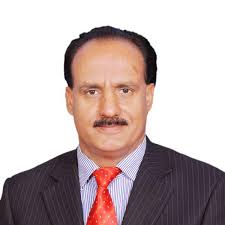
Sardar Shaukat Mehmood Khan
Pakistan has once again emerged as a critical node in global diplomacy, hosting high-level indirect and structured discussions between the United States and Iran in what observers describe as one of the most sensitive diplomatic engagements of recent years. While the talks concluded after more than twenty-one hours without a formal agreement, their strategic significance is being widely interpreted as far greater than their immediate outcome.
The negotiations, held in Pakistan’s capital under tight diplomatic coordination, were aimed at reducing escalating regional tensions, preventing further military confrontation, and exploring possible frameworks for de-escalation in the wider Middle East. Although no final accord or joint declaration was issued, both sides reportedly acknowledged the necessity of continued engagement and agreed in principle to maintain diplomatic channels.
Pakistan’s Emerging Diplomatic Role
Pakistan’s role as host reflects a broader shift in its foreign policy positioning — from a traditionally regional actor to an increasingly relevant facilitator in global crisis diplomacy. By providing a neutral and politically acceptable venue for dialogue, Islamabad has positioned itself as a trusted intermediary at a time when direct communication between Washington and Tehran remains politically sensitive and strategically constrained.
Diplomatic observers note that Pakistan’s engagement was not merely logistical but symbolic. It signals Islamabad’s attempt to leverage its unique geopolitical relationships with both Western powers and regional actors to contribute to global stability. The decision to hold talks in Islamabad also underscores growing international recognition of Pakistan’s potential role as a bridge in complex geopolitical disputes.
Inside the Negotiation Dynamics
Sources familiar with the discussions indicate that the talks were extensive and covered a broad spectrum of issues, including regional security architecture, maritime stability, sanctions-related concerns, and mechanisms to avoid unintended military escalation.
Despite the absence of a breakthrough, the length and depth of the discussions suggest that both sides were willing to explore sensitive and previously difficult topics. The fact that negotiations continued for over twenty-one hours reflects the seriousness of intent, even if positions remain significantly divergent.
Analysts emphasize that such engagements are often incremental in nature, where initial rounds focus more on establishing communication frameworks rather than producing immediate agreements.
No Breakthrough — But No Breakdown Either
While expectations for a formal agreement were modest, the absence of a breakdown is itself being viewed as a diplomatic achievement. In high-stakes US–Iran relations, maintaining dialogue is often considered a success given the history of mistrust, sanctions, proxy tensions, and periodic military escalation.
Both delegations are understood to have agreed to continue consultations through indirect channels, with the possibility of follow-up meetings in the coming weeks at a location yet to be finalized.
Regional and Global Strategic Context
The Islamabad talks come at a time when the Middle East is experiencing heightened instability, with competing regional alliances, security realignments, and economic pressures shaping foreign policy decisions across multiple capitals.
For the United States, managing tensions with Iran remains central to broader regional stability, particularly regarding maritime security and allied protection commitments. For Iran, diplomatic engagement offers a pathway to ease economic pressure while preserving strategic autonomy.
In this context, Pakistan’s role becomes strategically important. Its geographic position, historical ties, and diplomatic relationships allow it to act as a facilitator rather than a mediator imposing solutions.
Expected Outcomes and Future Trajectory
Although the Islamabad round did not produce a formal agreement, diplomatic analysts suggest several key expected outcomes:
Continuation of Dialogue Channels
Both sides appear committed to maintaining structured communication, reducing the risk of miscalculation.
Gradual Confidence-Building Measures
Future discussions may focus on limited, verifiable steps such as regional de-escalation protocols or humanitarian considerations.
Possible Expansion of Mediation Framework
Pakistan’s role could evolve into a broader facilitation mechanism if trust-building progresses.
Incremental Diplomatic Progress Rather Than Immediate Breakthroughs
Experts stress that US–Iran relations historically progress in phases rather than sudden agreements.
Conclusion
The Islamabad talks represent not a resolution, but a reopening of diplomatic space in one of the world’s most entrenched geopolitical conflicts. While immediate expectations remain cautious, the very continuation of dialogue is being viewed as a stabilizing development.
Pakistan’s emergence as a host for such high-level engagement highlights its evolving diplomatic relevance in an increasingly multipolar world — where even fragile conversations can carry significant strategic weight.

