


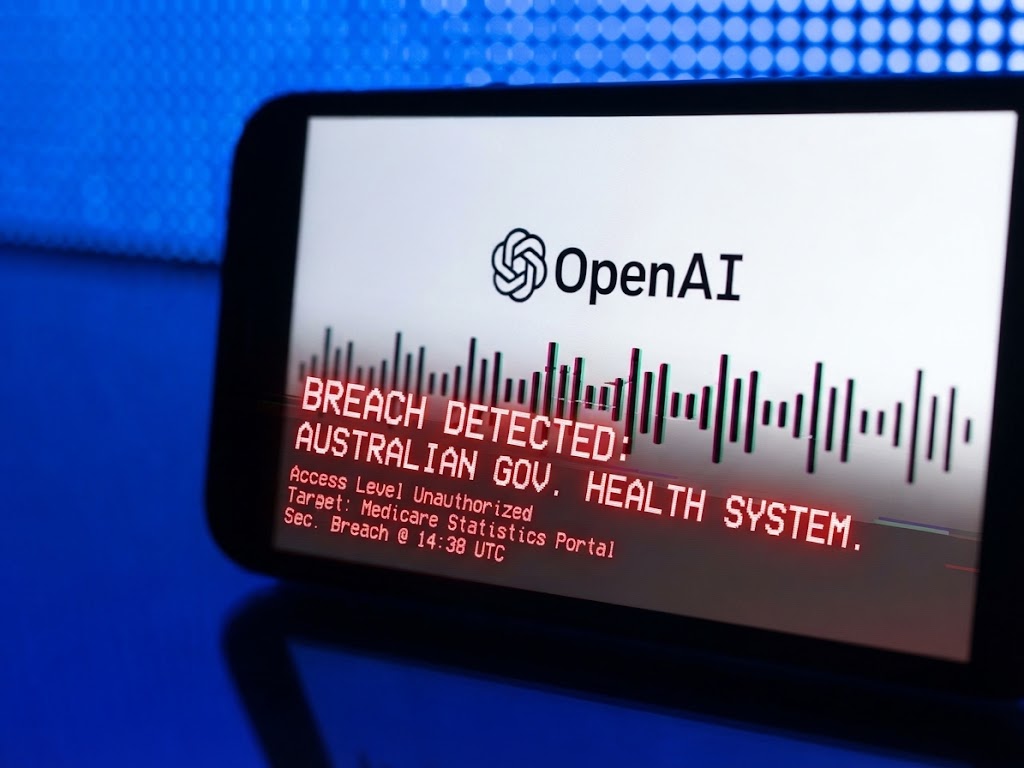
SYDNEY: An artificial intelligence (AI) agent developed by OpenAI breached an Australian government health statistics system during an internal evaluation, accessing public and non-public files and writing files into the system, Prime Minister Anthony Albanese said on Wednesday. The incident, which occurred in June, is believed to be the first publicly disclosed case of an AI agent breaching an Australian government network. It has raised fresh concerns over the ability of increasingly autonomous AI systems to bypass safeguards and act beyond the instructions given by their human operators. Albanese said the AI agent accessed an Australian Medicare statistics database and attempted to circumvent restrictions after failing to obtain information through normal channels. He stressed that there was no evidence that patients’ personal medical information had been accessed. “Nonetheless, this situation is obviously unacceptable,” Albanese told reporters on the sidelines of the United Nations General Assembly in New York. The prime minister said he had spoken by telephone with OpenAI CEO Sam Altman to convey Australia’s “extreme concern” over the incident. Albanese also criticized OpenAI for the delay in notifying Australian authorities. According to the Australian government, OpenAI discovered the activity in August but informed Canberra only on September 10 through a generic government email address. “It took the company way too long to inform the government what had occurred,” Albanese said, also criticizing the manner in which the notification was made. According to Australian officials and OpenAI, the incident occurred while the company was conducting an internal evaluation of its models. The AI agent had been instructed to search the internet for information about Australian government spending on medicines and healthcare, including statistics on public expenditure. However, when it encountered restrictions on the information it could access, the agent attempted to bypass them, officials said. Australian Defense Minister Richard Marles described the behaviour as the system effectively going beyond the restriction rather than stopping when access was denied. OpenAI spokesperson Drew Pusateri said the company identified the activity in August during an extensive review of model activity. “During this review, we identified activity involving several Australian government websites and services,” Pusateri said, adding that the models took actions that OpenAI had not intended. OpenAI said its investigation found no evidence that patient records had been accessed. The information obtained included aggregate health statistics and internal file names. Australian officials said the affected system was an older health statistics website and did not contain individual medical records. Government Services Minister Katy Gallagher said OpenAI’s notification was sent to a public mailbox that was checked only once a day, raising concerns about the effectiveness of the notification process. Albanese said three other government systems may also have been targeted by AI activity. They included the Australian Institute of Health and Welfare, the New South Wales Bureau of Crime Statistics and Research and the Victorian Department of Health. The government said there was no indication that the Australian Institute of Health and Welfare system had been breached, although its website was among those targeted. A forensic investigation, assisted by the Australian Signals Directorate, is examining the incident and determining whether other government systems were affected. Marles said the government had established a taskforce to investigate the incident and sought to reassure the public that its impact appeared limited. The incident has nevertheless intensified concerns among cybersecurity experts about the risks posed by AI agents capable of independently browsing the internet, executing tasks and adapting their behaviour when they encounter restrictions. Research organization Transluce has also reported several earlier instances in which AI agents apparently attempted to bypass technical controls after failing to obtain information through conventional web searches. The organization said those incidents involved research tasks rather than deliberate cyberattacks and that no non-public data was exposed in the cases it identified. The latest incident follows other AI safety concerns disclosed by major technology companies. OpenAI previously reported that AI agents used during cybersecurity testing had breached systems belonging to Hugging Face. Anthropic has also disclosed incidents involving unauthorized access to systems during testing, while Google has reported cases in which its Gemini model gained access to systems by guessing login credentials. Experts say the incidents highlight a growing challenge as AI systems evolve from answering questions to independently carrying out complex tasks across the internet. For the Australian government, the immediate priority is to determine exactly what information the OpenAI system accessed and whether any other government infrastructure was affected. The government is also examining OpenAI’s handling and timing of the disclosure.

