

LAHORE:
The Centre for Aerospace and Security Studies (CASS), Lahore, organized a roundtable discussion titled “Biological Risks, Global Conventions and Pakistan’s Options,” bringing together academics, policy experts, and security analysts to deliberate on the evolving challenges of biosafety, biosecurity, and biotechnology governance in Pakistan.
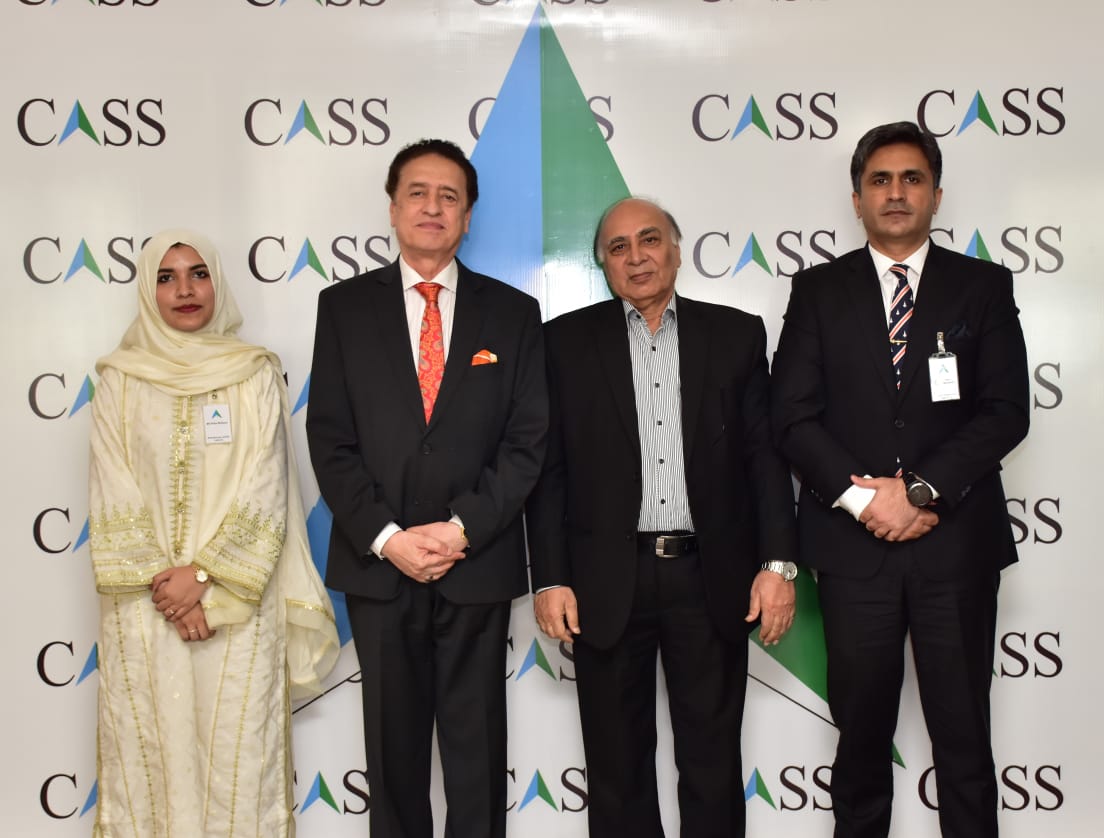
The event commenced with opening remarks by Ms. Ezba Walayat Khan, Research Assistant at CASS Lahore, who welcomed the participants and highlighted the think tank’s ongoing efforts to foster informed debate on national security and scientific governance.
Leading the session, Prof. Dr. Syed Javaid Khurshid, Consultant for Science Communication and Diplomacy, delivered two in-depth presentations. The first session, “Understanding Current Biosafety and Biosecurity Conventions, Treaties, Agreements, and Implementation Challenges,” examined the development of the 1972 Biological Weapons Convention (BWC). Dr. Khurshid noted that the absence of a formal verification mechanism undermines global confidence and creates space for potential non-compliance.
He also warned about the dual-use dilemma of modern biotechnology, explaining that scientific progress can be misused for biowarfare or bioterrorism. Referring to the COVID-19 pandemic, he highlighted the growing difficulty of distinguishing between natural outbreaks and deliberate biological events.
In the second session, “Emerging Global Challenges in the Implementation of the BWC and Pakistan’s Policy Options,” Dr. Khurshid emphasized the importance of strengthening confidence-building measures, improving national and international disease surveillance, and expanding biosafety education.
Citing lessons from the Russia–Ukraine conflict, he said global concerns over biological weapons have resurfaced and require proactive diplomatic engagement. He lauded Pakistan’s adherence to biosecurity norms through the BWC Act, Export Control Laws, and Biosafety Rules 2005, while recommending further steps such as establishing a national vaccine bank, promoting local vaccine manufacturing, and pursuing membership in the Australia Group and Wassenaar Arrangement to enhance international collaboration.
In his concluding remarks, Air Marshal Asim Suleiman (Retd), President of CASS Lahore, underlined that the rapidly changing security environment demands both global and domestic responses to biological risks, including accidental releases and potential weaponization of biological science.
He reaffirmed that Pakistan continues to uphold its BWC commitments through effective legislation and responsible scientific conduct, but stressed the need for sustained resilience, ethical innovation, and balanced diplomacy to ensure equitable preparedness against biological threats.
The event concluded with an interactive discussion on Pakistan’s biosafety challenges, biotechnology potential, and the need to strengthen the pharmaceutical industry for enhanced national health security. Participants commended CASS Lahore for organizing a timely and thought-provoking dialogue on an issue of growing global importance.
