

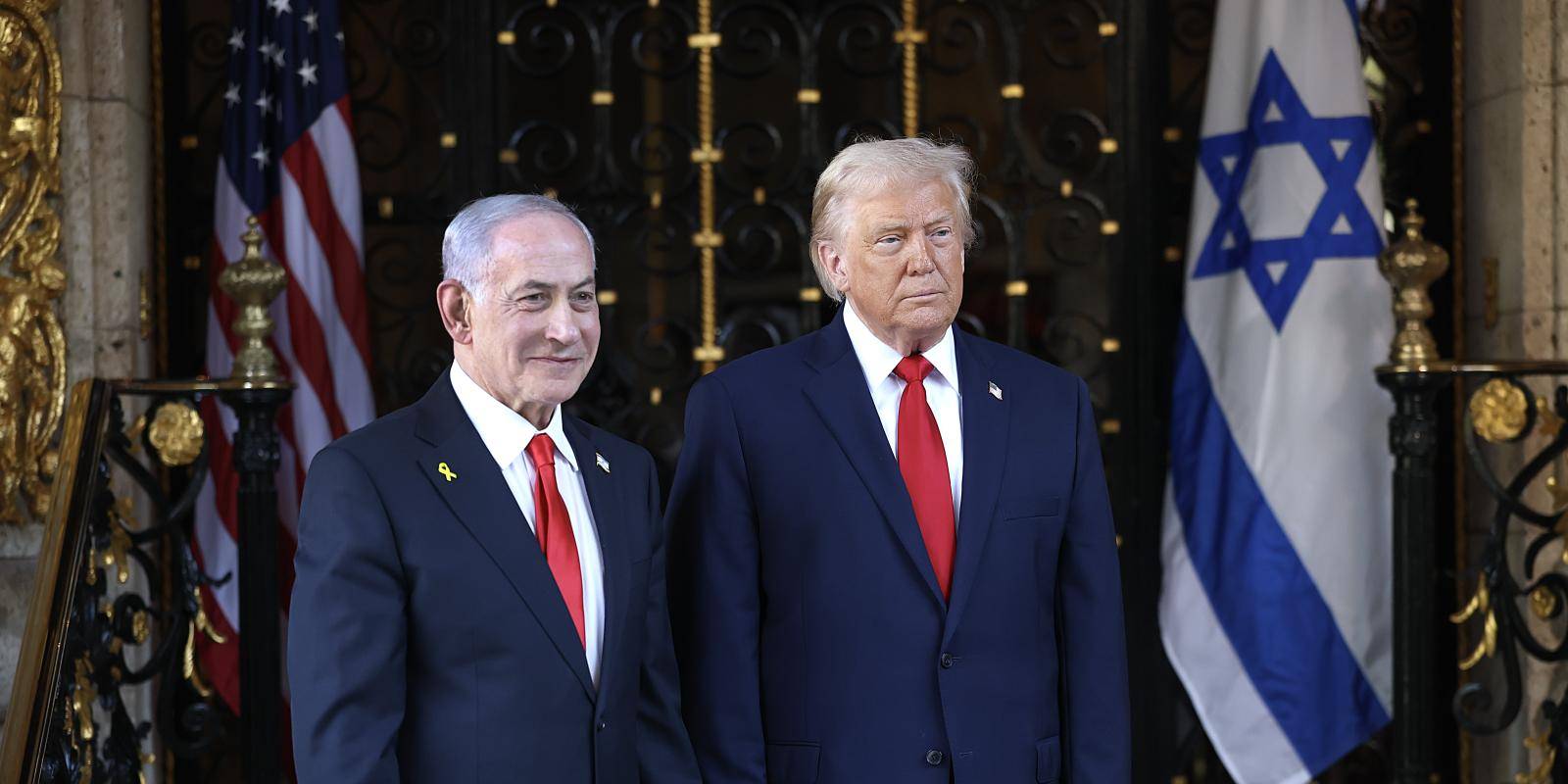
Never say that something is “impossible forever.” Yet at least one danger appears to have receded in recent days. For now, considerable uncertainty surrounds whether Israel and the United States will resume their attacks on Iran before next Tuesday’s Knesset election. The question of whether such an attack will take place remains unresolved and depends largely on Benjamin Netanyahu’s political calculations. But if the election fails to produce a decisive outcome—a realistic possibility, according to opinion polls—the likelihood of a renewed confrontation with Iran will increase, particularly amid the political struggle to form the next government. One thing, however, seems entirely clear: even if Netanyahu loses the election, he has no intention of disappearing quietly, to borrow the words of Welsh poet Dylan Thomas. He will resort to every available means to challenge the result or evade its consequences, regardless of the further damage this may inflict on the country. If he possessed even the slightest pang of conscience, this man would have died of it long ago. In the background lies a fundamental strategic question: the campaign against Iran. Contrary to the categorical claims made by Netanyahu and Donald Trump, the campaign did not end in total victory—neither after the first round in the summer of 2025 nor after the second in the winter of 2026. During the first attack, known as Operation Rising Lion, events appeared to align with Netanyahu’s wishes. After nearly three decades of disappointment, Trump gave the green light for the assault and ultimately joined it, striking the underground facility at Fordow. The operation was effective and precisely targeted, shocking Iran’s leadership and inflicting significant damage on its nuclear project. But it left behind a serious unresolved problem: a stockpile of approximately 450 kilograms of highly enriched uranium that had not been processed. The second campaign, known as Operation Lion’s Roar, presented the prime minister with an opportunity he could not afford to pass up. Israel was already preparing for another attack last June. The United States, meanwhile, remained hesitant when widespread protests erupted in Iran in early January. The regime brutally suppressed the demonstrations, killing thousands of protesters. Trump was finally persuaded to launch a second joint campaign during his meeting with Netanyahu at the White House on February 11. This time, the objective was more ambitious: regime change in Tehran. Yet even after Israel assassinated Supreme Leader Ali Khamenei and dealt further painful blows to Iran’s military and industrial capabilities, no decisive outcome followed. Iran’s new leadership, headed by Khamenei’s son Mojtaba, has refused to surrender despite the heavy damage inflicted on the country’s economy. Although the Americans have gradually found alternative ways to blockade Iran and restrict its access to the Strait of Hormuz, a prolonged war of attrition has taken hold, and Trump is struggling to find a way to bring it to an end. Washington now appears to believe that, as the November 3 midterm congressional elections approach—elections in which polls predict Republican losses—Trump may hand Netanyahu the initiative 1and approve a joint attack on Iran. He might do so even simply to vent his anger at Mojtaba Khamenei over the complications of the war and its political repercussions at home. According to a report published yesterday by The New York Times, the United States and Israel are indeed drawing up a plan for a joint attack after the midterms. Some officials in the US administration believe that several days of intensive strikes could bring Iran back to the negotiating table and force it to make concessions on its nuclear programme. Similar expectations have gone unfulfilled on several occasions in the past. The Things Left Unsaid Meanwhile, Mojtaba Khamenei’s position appears to be growing stronger, despite his hiding for fear of being killed. According to Israeli intelligence, Khamenei is driving the hard-line position in diplomatic talks and urging the Iranian people to resume efforts to develop the country’s nuclear and missile programmes. This also helps explain the repeated statements by Netanyahu and Israeli Defence Minister Israel Katz about Tehran’s plans to destroy Israel, as well as their threats to resume the war against Iran. Through such statements, Netanyahu appears to be trying simply to provoke Iran into striking first, thereby giving him and Trump a pretext for a forceful military response. He has tried almost everything—short of sending the Israeli Air Force’s aerobatic team on a display flight over Tehran. Last week, the prime minister escalated his rhetoric and made his threats more explicit. In a speech delivered last Tuesday at the graduation ceremony for officers at Military Academy No. 1, Netanyahu openly said that he had instructed the Israel Defense Forces, the Mossad and the security services to overthrow the Iranian regime. According to him, this was the only way to “eliminate this threat once and for all.” He also claimed that “Mojtaba Khamenei has been unleashed, and Iran is once again trying to develop lethal bombs.” There appears to be a degree of coordination between Netanyahu and Trump. Netanyahu’s sharper rhetoric on Sunday coincided with the release of a video in which the US president voiced strong support for Netanyahu’s candidacy in the election. Israeli intelligence agencies, however, appear to interpret the information concerning Iran in less definitive and less urgent terms. Unlike his long-standing indifference to the threat that emerged from Hamas in Gaza, Netanyahu has consistently amplified the Iranian threat. Now, after the fact, he portrays the launch of last year’s first campaign as a move that stopped Iran at the last moment from acquiring a military nuclear capability. Experts dispute that account. The General Staff is deeply sceptical about the prospects of regime change this time, following the failure of the previous round. Netanyahu’s political calculations are clearly driving this course of action. If he were allowed to attack Iran now, it could also lead to a postponement of the election, whose projected outcome does not appear favourable to him. But launching an attack after the election, while coalition negotiations are under way and the Change Bloc is working intensively to assemble a majority capable of replacing the government, could generate public pressure on Gadi Eisenkot and Naftali Bennett to compromise and agree to form a national-unity government with Likud.
Trump and Netanyahu Are Preparing a “Real Plan” to Strike Iran After October and the Midterms
By Asmaa Selim
21
