


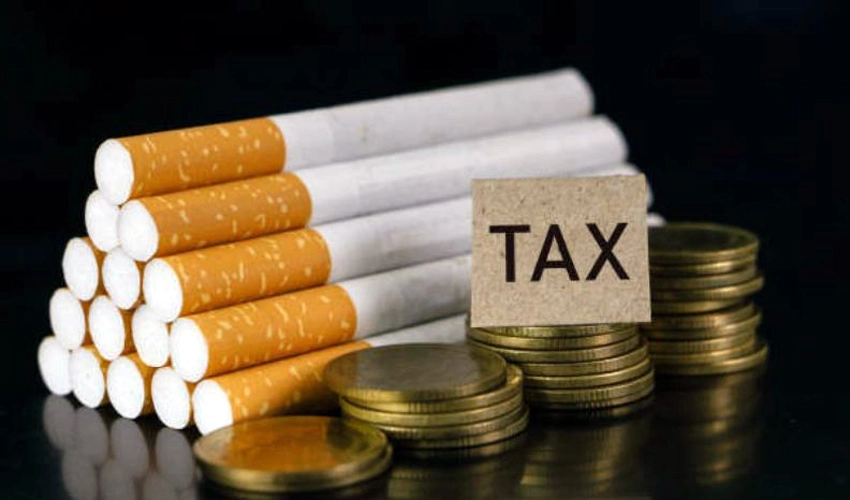
Islamabad: (Islamabadtoday City Reporter) — An overwhelming majority of Pakistanis support increased taxation on cigarettes and other tobacco products, according to a public opinion survey conducted by the Society for the Protection of the Rights of the Child (SPARC), a non-governmental organization working for child rights in Pakistan.
The survey, which included responses from 1,153 participants across the country, revealed that *93.6% of respondents favor raising taxes on tobacco products* while advocating for reduced taxes on essential items such as food and healthcare.
The primary aim of the survey was to assess public sentiment regarding potential reforms in Pakistan’s fiscal policy—specifically, shifting the tax burden away from essential goods and toward harmful products like tobacco. The results underscore strong public support for stringent tobacco control measures.
Speaking on the findings, *Dr. Khalil Ahmed, SPARC’s Program Manager, stated, *“This survey reflects the clear voice of the people. It shows that a significant number of Pakistanis are aware of the health risks associated with tobacco use and want the government to take swift and effective action to protect public health. It’s time to prioritize health over tobacco industry profits.”
Dr. Khalil highlighted that *youth and low-income families* are the most vulnerable to the health and financial consequences of tobacco use. He stressed that increasing tobacco taxes while lowering the cost of essential commodities is not just sound policy but also a *moral imperative*.
Tobacco use remains a major public health crisis in Pakistan, causing *over 160,000 deaths annually* and inflicting a financial burden of *PKR 615 billion per year* on the national economy—equivalent to *1.6% of the GDP*.
“Every cigarette smoked is not just a threat to individual health but also a strain on the economy,” Dr. Khalil added. “That money could be better invested in education, healthcare, and national development.”
SPARC emphasized that *raising tobacco taxes is a proven and effective strategy* for reducing tobacco consumption, especially among young people and low-income groups. However, Pakistan’s current tax rates on tobacco remain well below the *World Health Organization (WHO) recommendations*.
The organization urged policymakers to heed the public’s voice and implement *robust fiscal reforms* to curb tobacco use. “Prioritizing tobacco taxation is essential to building a healthier and economically resilient Pakistan,” SPARC said in its official statement.

