


58
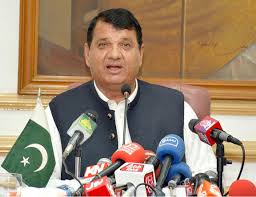
Islamabad: Federal Minister for Kashmir, Gilgit-Baltistan, and SAFRON, Engineer Amir Maqam, has urged accelerated implementation of the agreement reached with the Joint Awami Action Committee (JAAC) in Azad Kashmir, emphasizing coordinated efforts to provide relief to the public.
During a review meeting chaired by Maqam, he expressed satisfaction over progress so far and directed all relevant departments to expedite the execution of agreed measures.
“Azad Kashmir remains a top priority for the Prime Minister. Delivering tangible relief to the people is a shared responsibility of both the federal and Azad Kashmir governments,” Maqam said. He assured that the JPAC agreement would be fully and effectively implemented in line with the Prime Minister’s instructions.
Speaking to a private TV channel, Maqam highlighted that while progress is underway, certain legal procedures require time. “The health card issue has been resolved, and treatment has commenced in hospitals. Work is ongoing on all other points. We have always invited JAAC leaders to coordinate with us, and I repeat this call,” he said.
He stressed that public protests do not serve the interests of citizens and called on JAAC representatives to join the next meeting to ensure smooth implementation. “Our focus remains on delivering relief to the Kashmiri people,” he added.
On the political front, Maqam noted that a committee meeting was held under Shah Ghulam Qadir, which will conduct candidate interviews across all three divisions and forward recommendations for final approval by Nawaz Sharif, who is expected to visit Muzaffarabad for the final decision.
He further commented on the appointment of the Chief Election Commissioner, saying that while the ideal process involved consultation with both theb Prime Minister and the Opposition Leader of Azad Kashmir, suitable appointments have now been made and final selections will be confirmed shortly.
Addressing party differences, Maqam said thatn disagreements between the PML-N and the Azad Kashmir government are a normal part of democratic processes, and efforts are being made to resolve matters amicably and efficiently.

