WASHINGTON
American voters are heading to the polls on Tuesday in a crucial midterm election widely viewed as a referendum on the first two years of President Donald Trump’s second term, with control of Congress at stake.
Opinion polls and non-partisan analysts indicate that Democrats are seeking to regain control of the House of Representatives, while the battle for the Senate remains highly competitive. Nearly 10 Senate races are expected to play a significant role in determining which party secures a majority, with most contests taking place in traditionally Republican states.
Historical trends pose a challenge for Trump’s Republicans. Since the Second World War, the party holding the presidency has lost congressional seats in all but two midterm elections. Trump’s approval rating is also reported to be near its lowest level, amid growing public dissatisfaction over the war with Iran and the resulting increase in fuel prices.
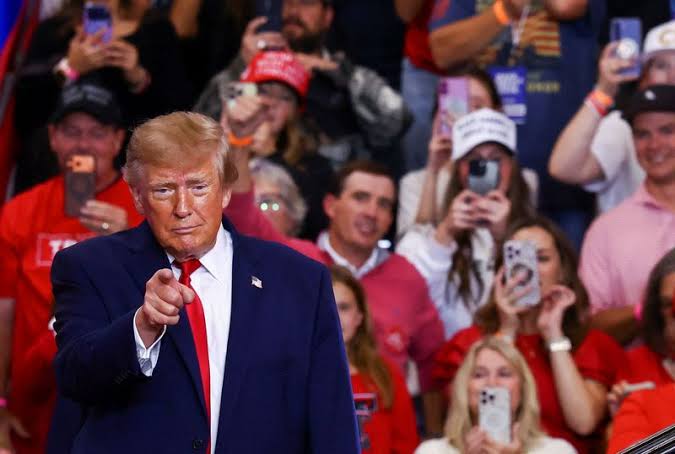
The election has increasingly become a political test of Trump’s leadership. Having dominated American politics for much of the past decade, Trump has repeatedly urged supporters to treat the election as though his own name were on the ballot. Democratic leaders have echoed the message, framing the contest as a judgment on his administration’s policies and performance.
Since early October, Trump has held more than two dozen campaign rallies, largely in states he comfortably won in the 2024 presidential election. His extensive campaigning highlights the importance Republicans are attaching to retaining their congressional majorities.
Republican leaders, led by Trump, have sought to portray Democratic candidates as radical and extreme. Speaking in Washington on Monday, Trump accused the Democratic Party of nominating what he described as the most extreme and dangerous slate of candidates in American history.
However, opinion polls suggest that the cost of living remains a central concern for voters. Many Americans have expressed dissatisfaction with the administration’s handling of economic issues, particularly following Trump’s sweeping tariff measures and the decision to launch military action against Iran in February, both of which have contributed to concerns over rising domestic costs.
Republican candidates have also faced the challenge of maintaining their political independence while remaining aligned with a president who expects strong loyalty from his party.
All 435 seats in the House of Representatives are being contested, alongside 35 of the Senate’s 100 seats. Although many races are not considered competitive, Democrats need to gain at least three seats in the House and four in the Senate to secure majorities in both chambers.
A Democratic-controlled House or Senate could significantly constrain Trump’s legislative agenda. Democrats would gain greater authority to launch congressional investigations into what they describe as potential conflicts of interest and self-dealing within the administration, while also gaining leverage over legislation.
A Democratic majority in the Senate could additionally block presidential appointments, including nominations to the US Supreme Court should vacancies arise.
Despite putting several Republican-held seats under pressure, Democrats face considerable challenges of their own. They must defend all their existing Senate seats while attempting to make gains in states that backed Trump by double-digit margins in the 2024 presidential election.
These include Alaska, Iowa, Kansas, Nebraska, Ohio, South Carolina and Texas. Opinion polls have indicated that Democratic candidates are either narrowly ahead or within competitive distance in several of these states, although the races remain uncertain.
Michigan Senate Race Takes Unexpected Turn
The closely watched Michigan Senate contest has attracted renewed attention following a surprise political development.
Democratic candidate Abdul El-Sayed, 42, is facing Republican former US Representative Mike Rogers, 63. The race took an unexpected turn on Sunday when Democratic Congresswoman Haley Stevens, who narrowly lost to El-Sayed in the party’s primary, endorsed Rogers.
The endorsement has added a new dimension to an already closely watched contest, highlighting the political divisions within the Democratic Party as both parties compete for control of the Senate.
With economic concerns, foreign policy and Trump’s leadership dominating the campaign, Tuesday’s midterm elections are set to have significant implications for the balance of power in Washington and the direction of American politics over the remaining two years of his presidency.