


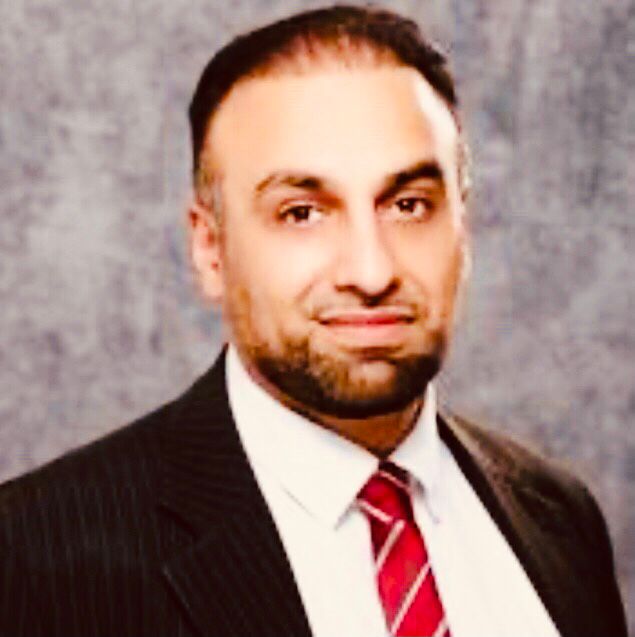
Kaleem Hussain
A month has surpassed since President Donald Trump’s new administration have come to power. The Trump 2.0 administration inherits two major conflict hot spots between Isreal- Hamas in Gaza, Russia-Ukraine, and others that have caused ripple effects across multiple fronts in the Middle East, Europe and beyond. As Trump was being inaugurated as President of the U.S. for the second time, the sound boards were being made that if Trump is able to establish peace in these two major conflicts, he deserves to receive the Noble Peace Prize which former President Barack Obama received in 2009 for his “extraordinary efforts to strengthen international diplomacy and cooperation between peoples” very early in his tenure. Mr Geir Lundestad, who served as the committee’s influential, but non-voting, secretary from 1990-2015 later stated the peace award failed to achieve what the committee had hoped. U.S. National Security Adviser Mike Waltz echoed the same sentiments in the CPAC Conference 2025 by exclaiming that Trump will receive a Noble Peace Prize for his efforts to end conflicts in Europe and the Middle East. “Trump is going to end the war in Europe, he is going to end the wars in the Middle East, he is going reinvest in the United States in our own hemisphere.” Steve Witkoff, Trump’s Middle East Envoy reiterated the U.S. administration new foreign and defence policy goal of “peace through strength” at the FII Priority Summit 2025, a term that Ronald Reagan also used during his tenure, where Witkoff stressed at the Summit how it was U.S. leverage that helped the ceasefire between Hamas and Israel to materialise. The Trump pressure tactic of “all hell will break out” seems to have played a role in bringing the conflicting parties towards the ceasefire and sticking to the fragile three stage Gaza ceasefire and hostage exchange deal to date. The peace through strength policy also carries the risk of blowback if the contextual historical, heritage, cultural and religious sensitivities of impacted communities are not considered as part of any agreement. We have witnessed early manifestations of this with Trump’s “vision for Gaza” and the subsequent reactions from Arab countries of rejecting the displacement of Palestinians while not directly negating the Trump idea partially based on the geo-economic and political ties the Arab countries have with the U.S. where Trump stated during a press conference in Washington DC that he hopes the U.S. financial assistance to many of the Arab countries does not have to be used as part of the conditionality and bargaining process for his grandiose Gaza plan. When it comes to Russia-Ukraine, Steve Witkoff has already met Putin. Secretary of State Marco Rubio, Witkoff and Waltz met with Russian Foreign Minister Sergei Lavrov where the message was that Trump wants the killing to stop, and that the U.S. wants peace and is using its strength around the world to bring countries together. Trump has applied the pressure tactic of calling Ukrainian President Volodymyr Zelensky a “dictator” and accused Zelensky of “refusing to have elections” where Ukraine has been under martial law since Russia invaded in February 2022, meaning elections are in fact suspended. The peace through strength U.S. policy is intertwined with Transactional Diplomacy tactics to orientate conflicting parties towards a peace agreement in the Russia-Ukraine conflict. At the World Economic Forum 2025, Trump told NATO members to spend 5% of GDP on defence where it currently hovers between 2%-2.5% of GDP. Trump has also put pressure on Ukraine to agree to a minerals deal, which Zelensky deems is unfavourable to Ukraine where the U.S. is promising to co-invest with Ukraine in its economy and natural resources. Similarly, Transactional Diplomacy was also at play between Russia and the U.S. when they discussed cooperation on energy projects in the Arctic at a meeting in Saudi Arabia. British Prime Minister Sir Keir Starmer has stated that the UK is “ready and willing” to put UK troops on the ground in Ukraine to help guarantee its security as part of a peace deal. This falls into a wider security architecture to protect Europe and Britain’s national security. Sir Keir, who is scheduled to meet President Donald Trump in Washington DC later this month reiterated “U.S. security guarantee is essential for a lasting peace, because only the U.S. can deter Putin from attacking again.” There is no doubt, despite the changing balance of power dynamics that are affecting our global polity, the U.S. still holds significant leverage on the international stage in pivoting and steering conflicts towards de-confliction and or escalation. We are entering a period where country first doctrines, national economic and geopolitical interests will trump transnational and supra-national frameworks with the U.S. introduction of 25% tariff on all steel and aluminium imports as an example along with the PM Modi’s recent visit to Washington DC where he coined the phrase “MAGA plus MIGA becomes MEGA” in terms of India-US partnerships for future prosperity. For peace through strength to succeed, it will be imperative that the international rules-based order that champions the causes of justice, humanity, proportionality, equity, human rights, environmentalism, responsibility to protect are universally adhered to and are not neglected at the whims of democratic, autocratic and undemocratic dictators. If President Trump can establish a modicum of peace in the Middle East and the Russia-Ukraine conflicts, a plausible case for receiving the Noble Peace Prize can be made. However, if this peace through strength goal is pursued by adopting a top-down vertical carrot and stick, good cop, bad cop foreign policy approach dynamic that does not factor in or address the contextual root causes of the conflicts in these regions, then the likelihood of achieving a long-lasting sustainable peace shall diminish along with the glimmers of hope the innocent victims and parties of these protracted conflicts carry to see these conflicts come to an end. Author, RANE Affiliate, Honorary Fellow-Edward Cadbury Centre for the Public Understanding of Religion, University of Birmingham.

