


International Women’s Day is celebrated on March 8th every year, and it has a rich history. However, if we look at the facts, Islam granted women their rights 1,400 years ago. These rights include the right to property, marriage and remarriage, business, employment, politics, and more.
But the question arises, to what extent have these rights been implemented? Even today, in our society, sisters are often deprived of their rightful inheritance. And despite being an Islamic society, women’s rights are often overshadowed by our cultural traditions.
If we look at Pakistan, on one hand, people talk about Islam, but perhaps due to their cultural traditions, they are far from implementing its teachings in practice. On the other hand, there is a segment of society that advocates for Western values.
Both sides outdo each other in presenting arguments, but neither delves into the actual facts. It must be acknowledged that the rights women have practically obtained are a result of the immense sacrifices they made in the West. For a detailed understanding, one can study the struggle for women’s rights and feminism.
Islam advocates for women to observe modesty, but different schools of thought have varying interpretations of what constitutes modesty. This divergence in opinions leads to confusion and controversy, making it essential to seek a balanced understanding of women’s rights within the Islamic framework.
It’s essential to acknowledge that if the concept of hijab or modesty is practiced in accordance with Islamic principles and God’s will, it can lead to the elimination of many social evils. There has always been a debate between those who propagate Islamic ideologies and those who consider the West as a role model.
However, if we focus on basic human rights, a woman should be free to choose her attire, whether it’s a modern dress or a burqa. US President Donald Trump once stated that just as Western women are allowed to wear modern dresses, women in Islamic societies should also be permitted to wear the burqa. Ultimately, everyone should be able to practice their beliefs without any obstacles.
In summary, Islam granted women their rights, but unfortunately, these rights are not being implemented in practice. Islamic law provides a comprehensive list of women’s rights, including property ownership, the right to vote, and other essential rights, which go beyond just the concept of modesty.
On the other hand, women in the West have made significant strides in achieving their rights, enabling them to vote, participate in assemblies, and more. We cannot overlook these achievements.
It’s crucial to
acknowledge that in underdeveloped countries, particularly in Pakistan and Azad Kashmir, significant work needs to be done to protect women’s rights. Moreover, women are increasingly vulnerable to issues arising from excessive social media use, which demands attention.
Lastly, it’s essential to recognize the plight of women in occupied Kashmir, Palestine, and other countries fighting for freedom, where women are subjected to the most brutal injustices. We must focus on addressing these issues as well.
A woman and a man are like two wheels of a car. Women compete with men in every field. If you look at our beloved country Pakistan, the Chief Minister of Punjab Maryum Nawaz is playing a vital role in leading the province. The Muslim League-N government in Pakistan is also playing a crucial role in promoting women’s rights. Maryam Nawaz, as the Chief Minister of Punjab, is playing a key role in empowering women.
This highlights the importance of women’s participation in all aspects of life and their role in leadership team positions, even in a country like Pakistan where women’s rights have historically been a challenge.
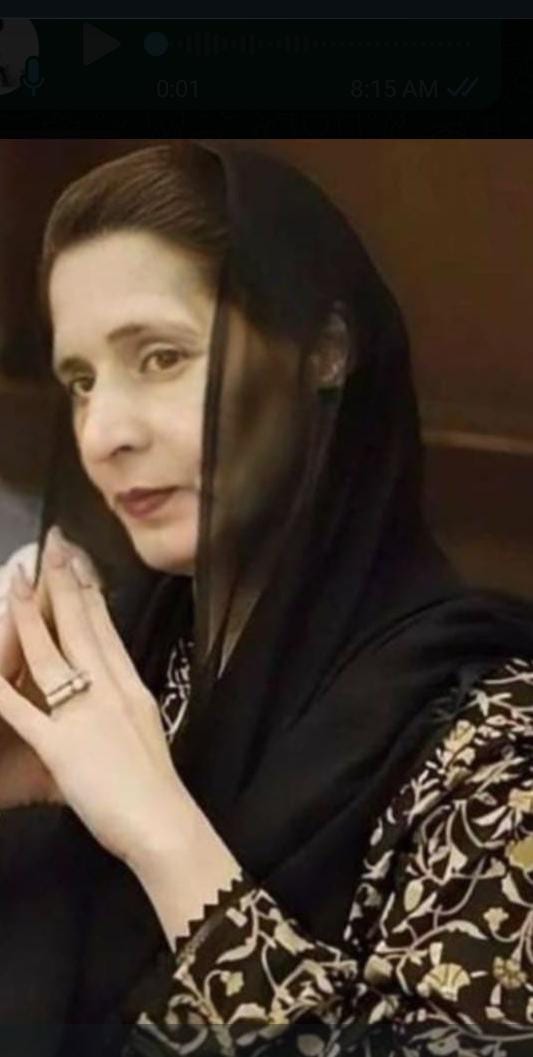
Women are playing their part in every field, whether it’s religion or politics. I’d like to share my own example. I started my career as a teacher and performed my duties to the best of my abilities. Later, I got the opportunity to work with social organizations, particularly the Hamza Foundation, on women’s development projects in Jhelum Valley. I also worked with the Human Rights Council of Pakistan in Azad Kashmir, initially in the Muzaffarabad district and later across the entire region as the Secretary of Information.
The Human Rights Council of Pakistan was founded by my brother, Muhammad Ishaq Qureshi, who is the President of the organization in Azad Kashmir. The organization focuses on human rights issues. Politically, I am affiliated with the Pakistan Muslim League-N in Azad Kashmir. I began my political career as a worker and polling agent, and now I serve as the Central Joint Secretary of the Women’s Wing of the Pakistan Muslim League-N in Azad Kashmir. Women are making significant contributions in every field, and I have also been involved in journalism. However, after entering practical politics, I have devoted my full attention to politics.I had a passion for writing, which led me to start writing columns on various topics. Later, I co-founded the “Jammu and Kashmir Columnists Association” and serve as its Chief Coordinator. This organization is actively pursuing its mission.While writing about International Women’s Day on March 8th, I shared some explanatory points. However, my primary objective is to convey that observing this day by organizing rallies or seminars is not a sin. Whoever raises their voice for women’s rights will have our support.
Nevertheless, we must also consider our societal and Islamic traditions. We must respect the sanctity of women’s dignity and avoid unnecessary slogans. In the society we live in, we must move forward by taking men along with us.This will enable us to bring genuine prosperity to our society. May Allah be our helper and supporter. Ameen!

