ISLAMABAD
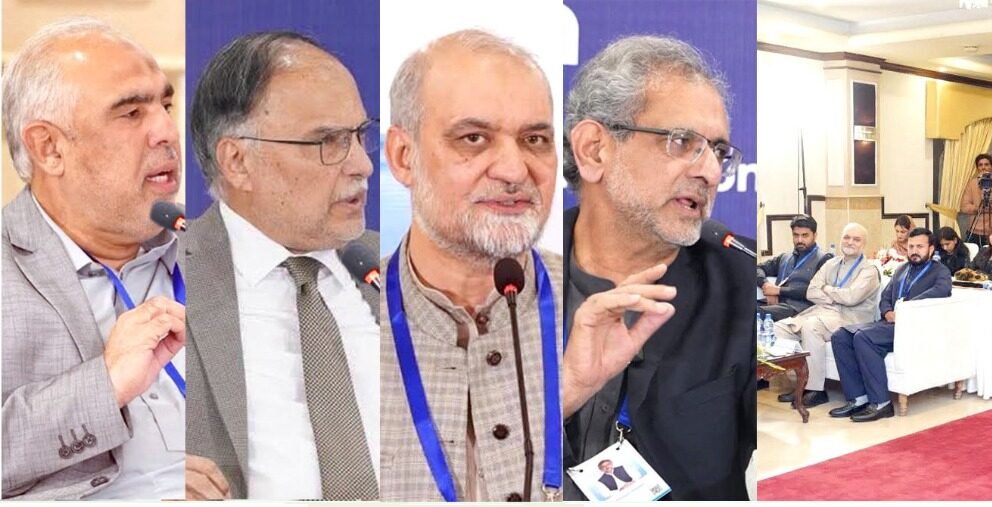
The Islami Jamiat-e-Talaba organised a National Dialogue on Education Conference in Islamabad under the theme “Save Education, Save Pakistan”, bringing together prominent political leaders, educationists, teachers, students and journalists to deliberate on the challenges confronting Pakistan’s education system and explore a way forward for meaningful reforms.
The conference, held under the broader theme “Problems | Prospects | Students Union”, was attended by President of the Awaam Pakistan Party and former Prime Minister Shahid Khaqan Abbasi, Jamaat-e-Islami Emir Hafiz Naeem ur Rehman, Federal Minister for Planning Ahsan Iqbal and former Speaker of the National Assembly Asad Qaiser, among other distinguished participants.
Addressing the gathering, former prime minister Shahid Khaqan Abbasi emphasised that no nation could achieve sustainable progress without prioritising education. He said Pakistan’s future was intrinsically linked to its young population and educational institutions, stressing that education must be treated as a national priority beyond political considerations.
Jamaat-e-Islami Emir Hafiz Naeem ur Rehman also shared his views on the state of education in the country, the challenges faced by students and the importance of restoring student unions to ensure meaningful student representation and participation in educational institutions.
Federal Minister for Planning Ahsan Iqbal said improving the education system remained among the government’s key priorities. He underlined the need to equip young people with modern education, professional skills and research opportunities, describing students as the country’s most valuable asset and a driving force behind its future development.
Former National Assembly Speaker Asad Qaiser observed that student unions served as nurseries of democracy, providing young people with opportunities to develop leadership skills and understand democratic values. He maintained that students should have the right to raise their concerns and seek solutions to the problems affecting them.
He also stressed the importance of ensuring drug-free educational institutions, protecting schoolchildren and maintaining a safe, peaceful and conducive learning environment, saying these were collective responsibilities requiring serious attention.
Participants held detailed discussions on a range of pressing educational issues, including the restoration of student unions, rising educational costs and fees, reductions in the education budget, drug-free campuses, schoolchildren’s safety and the creation of employment opportunities for young graduates.
The organisers said the primary objective of the National Dialogue was to bring political leadership, educationists, teachers and students onto a common platform to develop a national consensus on education reforms and address the longstanding challenges confronting the country’s education sector.
At the conclusion of the conference, participants reaffirmed their commitment to continuing collective efforts for improving the quality of education, safeguarding students’ rights and ensuring that the voices and concerns of young people were effectively represented at every relevant forum.