

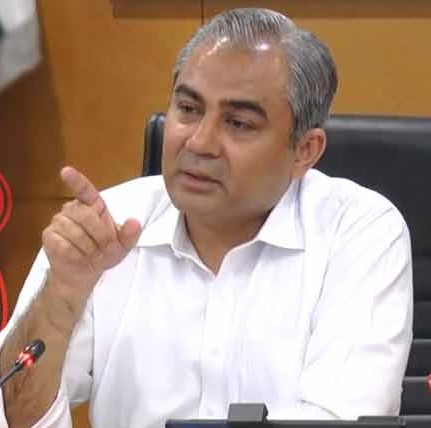
ISLAMABAD: Interior Minister Mohsin Naqvi on Tuesday said the government had no intention of curtailing legitimate freedom of expression, including criticism of the government, but warned that there would be no compromise on four red lines for social media platforms: terrorism, hate speech, incitement to violence and child sexual exploitation. Speaking at a seminar organized by the Sustainable Development Policy Institute (SDPI) in Islamabad, the minister identified four red lines for social media platforms: terrorism, hate speech, incitement to violence and sexual exploitation of children. “There will be no compromise on these four points,” he said, while clarifying that the government had no intention of curtailing legitimate freedom of expression. “Journalists must report. Citizens must question. Dissent must be heard, including against the government,” he said, adding that freedom of speech could not be used as a shield by those crossing the stated red lines. The Interior minister said the establishment of the Social Media Protection Regulatory Authority (SMPRA) would help the government address online crimes and ensure social media platforms respond promptly to complaints from victims Naqvi added that social media platforms, over-the-top (OTT) services and major content creators would initially be required to register with the authority. He clarified that registration was “not a license to silence anyone” but was intended to establish accountability and identify those responsible if something went wrong Naqvi said major social media platforms would also be expected to nominate empowered country representatives authorized to make decisions on complaints, rather than merely act as intermediaries. He added that the SMPRA would oversee that the platforms responded to victims’ complaints and ensure that requests for assistance were addressed in a timely manner. Outlining the proposed mechanism, the minister said the authority would follow a standard operating procedure of “engagement, notice and then penalties”, adding that blocking an entire platform would remain a last resort. Naqvi criticized social media platforms for acting on only 47% of the government’s requests to curb terrorism-related content. He said terrorist organizations were using online platforms for recruitment, fundraising and promoting their narratives. The minister also said the government lacked the manpower, resources and technology required to tackle digital crime on its own. Citing the limited capacity of the National Cyber Crime Investigation Agency (NCCIA), he said Punjab had only 61 personnel in the agency, including clerical staff and drivers, despite having a population of around 140 million. He said the government had plans for the capacity building of the organization as well as moving the complaint platform under it on the Pak ID app to facilitate ease of access. Referring to cases of online harassment, the minister said five female victims of cybercrime had recently met him during an open court hearing. Three women had expressed fears of ending their lives over the possible circulation of their objectionable personal photographs, while two others were survivors of suicide attempts. He said the victims had complained about the absence of an effective mechanism to approach social media platforms and seek relief. Naqvi also cited a recent case involving an international gang allegedly involved in the online sale of sexually explicit material featuring children. He thanked Google for its cooperation in helping authorities trace a child sex offender in Abbottabad. “When a platform acts, a child is protected,” he highlighted. Earlier in the seminar, Khyber-Pakhtunkhwa (K-P) Governor Faisal Karim Kundi underscored the growing challenge of distinguishing fake news from authentic information in the digital age.
Naqvi says govt has no intention of curtailing freedom of expression, warns against crossing ‘red lines’
1

previous post