MUZAFFARABAD
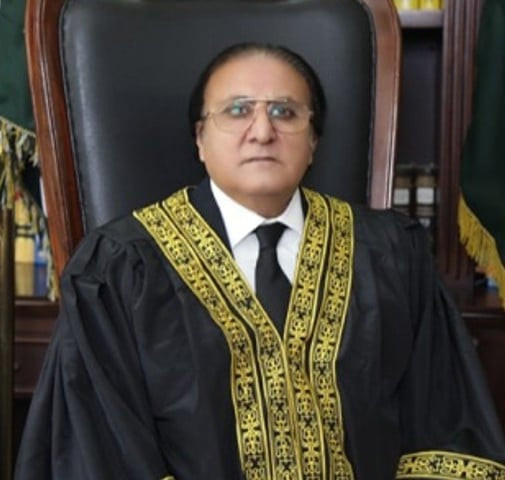
Chief Justice of the High Court of Azad Jammu and Kashmir, Justice Sardar Liaquat Hussain, has paid tribute to the sacrifices of those who liberated Azad Jammu and Kashmir from Dogra rule, stressing that freedom was achieved through courage, struggle and the supreme sacrifices of the people, rather than negotiations or table talks. He has called on the United Nations and the international community to play a meaningful role in securing the right to self-determination for the people of Indian-occupied Kashmir.
He was addressing a ceremony organised by the Cultural Committee of the Central Bar Association Muzaffarabad to mark the 79th Foundation Day of Azad Jammu and Kashmir on October 24.
Justice Sardar Liaquat Hussain said the liberation of the 4,500-square-mile territory now known as Azad Jammu and Kashmir was the result of a determined popular struggle against Dogra rule. He said their forefathers had endured bullets, batons and immense hardships, offering countless sacrifices to secure freedom for their homeland.
Paying tribute to the historical struggle, the chief justice recalled that a revolutionary government was established on October 24, 1947, under the leadership of Ghazi-e-Millat Sardar Muhammad Ibrahim Khan. He said the establishment of this government marked a defining moment in the history of the region and gave a new direction to the Kashmir freedom movement.
Turning to the continuing struggle of Kashmiris, Justice Sardar Liaquat Hussain said the people of Jammu and Kashmir had a recognised right to determine their political future according to their own wishes. However, millions of Kashmiris living in Indian-occupied Kashmir continued to await the realisation of their right to self-determination.
He emphasised that the future of Kashmir must be determined in accordance with the aspirations and free will of its people. He urged the United Nations and the international community to fulfil their obligations and take effective steps towards ensuring that Kashmiris could exercise this fundamental right.
The chief justice said the determination and spirit of sacrifice that had led to the liberation of Azad Kashmir continued to inspire the Kashmiri people. He added that the struggle would persist as long as their legitimate aspirations remained unfulfilled and the international community failed to deliver on its commitments.
Highlighting the historic contribution of lawyers to national and political movements, Justice Sardar Liaquat Hussain recalled the pivotal role played by Quaid-e-Azam Muhammad Ali Jinnah in the Pakistan Movement as a distinguished barrister and visionary leader. He also acknowledged the contributions of Ghazi-e-Millat Sardar Muhammad Ibrahim Khan and other prominent figures in the establishment of Azad Kashmir.
He said that while the liberation struggle had been a collective achievement of the people, lawyers and legal experts had also played an important role in providing leadership, direction and constitutional understanding to national movements.
Emphasising the responsibilities of the legal fraternity, he urged lawyers to use their professional standing and influence to raise the voice of the Kashmiri people, advocate their right to self-determination and draw international attention to the challenges confronting those living in Indian-occupied Kashmir.
The chief justice reaffirmed that Pakistan continued to stand by the Kashmiri people in their struggle for their legitimate rights. He said Kashmiris, in turn, stood shoulder to shoulder with Pakistan and its armed forces. Expressing hope for a peaceful and just future, he said he remained optimistic that the people of Indian-occupied Kashmir would one day be able to determine their destiny in accordance with their own aspirations.
Justice Sardar Liaquat Hussain also expressed concern over reports of human rights violations and abuses in Indian-occupied Kashmir, particularly the hardships faced by ordinary citizens and the threats to the dignity, honour and security of Kashmiri women and girls. He called on the international community to take concrete measures to protect human rights, alleviate the suffering of the people and support a just and lasting settlement of the Kashmir dispute.
The ceremony was attended by the Judge of the Accountability Court Muzaffarabad, the District Qazi Muzaffarabad, judges and qazis of the district courts, members of the AJK Bar Council, the General Secretary of the Supreme Court Bar Association, senior lawyers, office-bearers of the Central Bar Association Muzaffarabad and a large number of members of the legal fraternity.
Chairperson of the Cultural Committee of the Central Bar Association Muzaffarabad, Advocate Bilqees Rasheed Minhas, along with Advocates Raja Zahid Akram and Iqbal Rasheed Minhas, also addressed the gathering.
The ceremony concluded with the cutting of a cake to commemorate the 79th Foundation Day of Azad Jammu and Kashmir, reaffirming the historical significance of October 24 and the enduring aspirations of the Kashmiri people for peace, dignity and the right to determine their own future.